
For the first couple of weeks after the salon, your colour looks exactly the way you wanted it to. Then it starts: copper tones go dull, cool blonde turns yellow, and that rich chestnut becomes somehow “not quite right”. Some of this is unavoidable – pigment gradually leaves the hair no matter how well you look after it. But how fast that happens depends on a handful of things you can actually control.
Below: what really washes colour out, how often and with what water to wash coloured hair, and where real benefits end and label promises begin.
What fades hair dye the fastest
In short: colour fades fastest because of hot water, harsh cleansing agents, chlorine, UV and minerals from hard water. Each of them either lifts the cuticle scales and lets pigment escape, or settles on the hair and dulls the colour from the outside.
Hot water
The cuticle is the outer layer of the hair, and it looks a bit like roof tiles. After dyeing it is already slightly raised: the dye had to get inside, and the chemicals opened the scales to let it in. Hot water opens them even further. Pigment escapes much more easily, especially in the first few weeks – you can often see it in the colour of the water when you rinse.
Warm water is plenty to clean your scalp. Finish with a cool rinse through the lengths for about 20–30 seconds.
Harsh cleansing agents
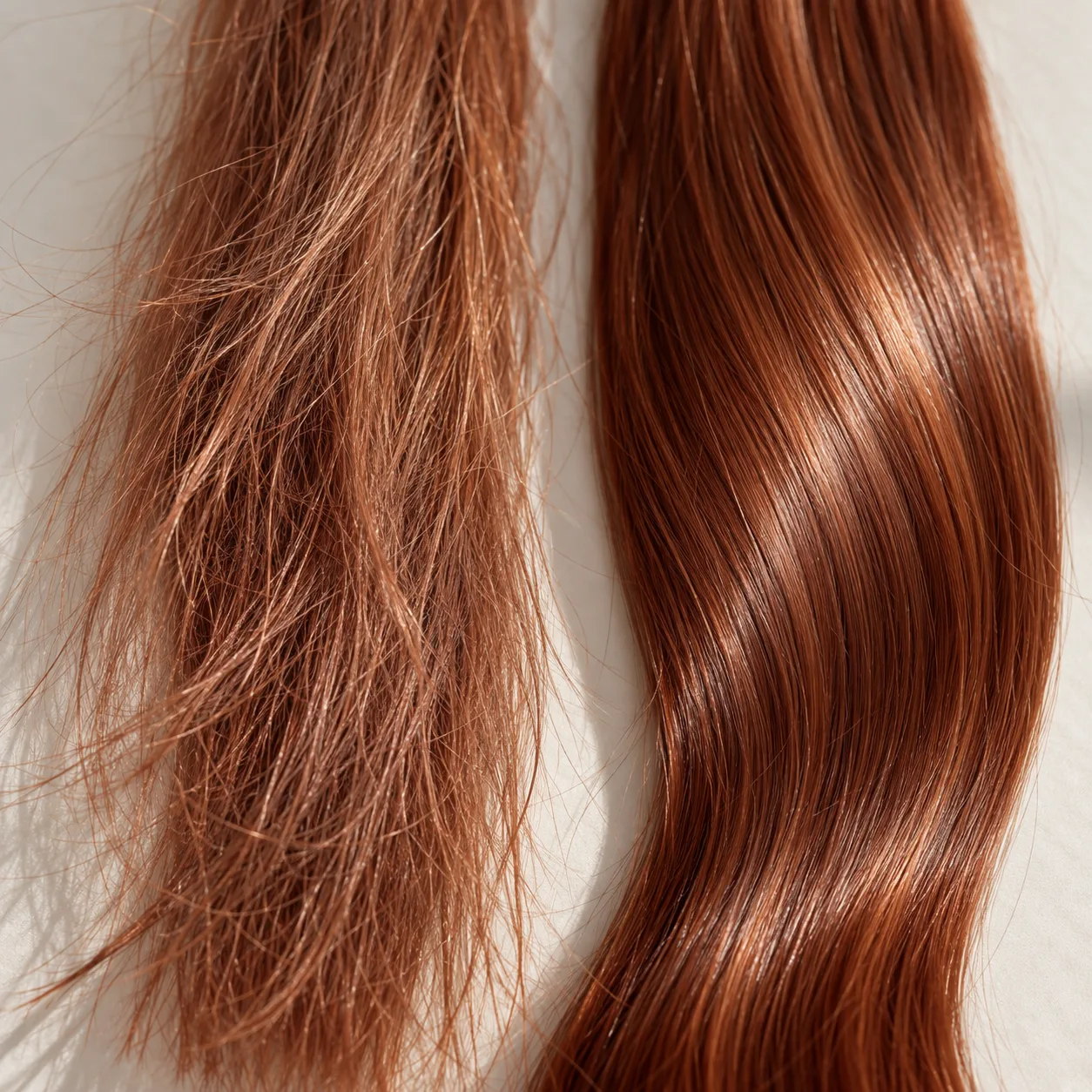
Shampoo is there to remove sebum, dust and product build-up. Strong surfactants do that very well – and take some of the pigment with them, along with the natural lipids that keep the cuticle tight. The more porous the hair (and after bleaching it almost always is), the faster it gives up its colour.
We cover how to choose a shampoo for coloured hair and what to look for in the ingredients in a separate article – shampoo for colour-treated hair: the complete guide. Here we’ll focus on what those guides usually leave out.
Hard water – the factor hardly anyone talks about
Hard water contains a lot of dissolved calcium and magnesium. When you wash, these minerals react with the cleansing agents, and some of them stay on the hair as a thin film. It builds up slowly, wash after wash, so it’s easy to miss.
What it looks like in practice:
- the colour looks flat even though the pigment is still in the hair – it’s just “dusted over”;
- the lengths feel rough and dry even after a mask;
- light hair picks up a yellowish or greenish tint – if the water carries iron or copper from old pipes;
- hair absorbs care products less well, because they sit on a mineral film instead of the cuticle.
If you’ve moved and noticed your hair behaving differently with exactly the same products, the water is very often the reason. You can usually find the water hardness for your area on your local water supplier’s website.
What to do about it:
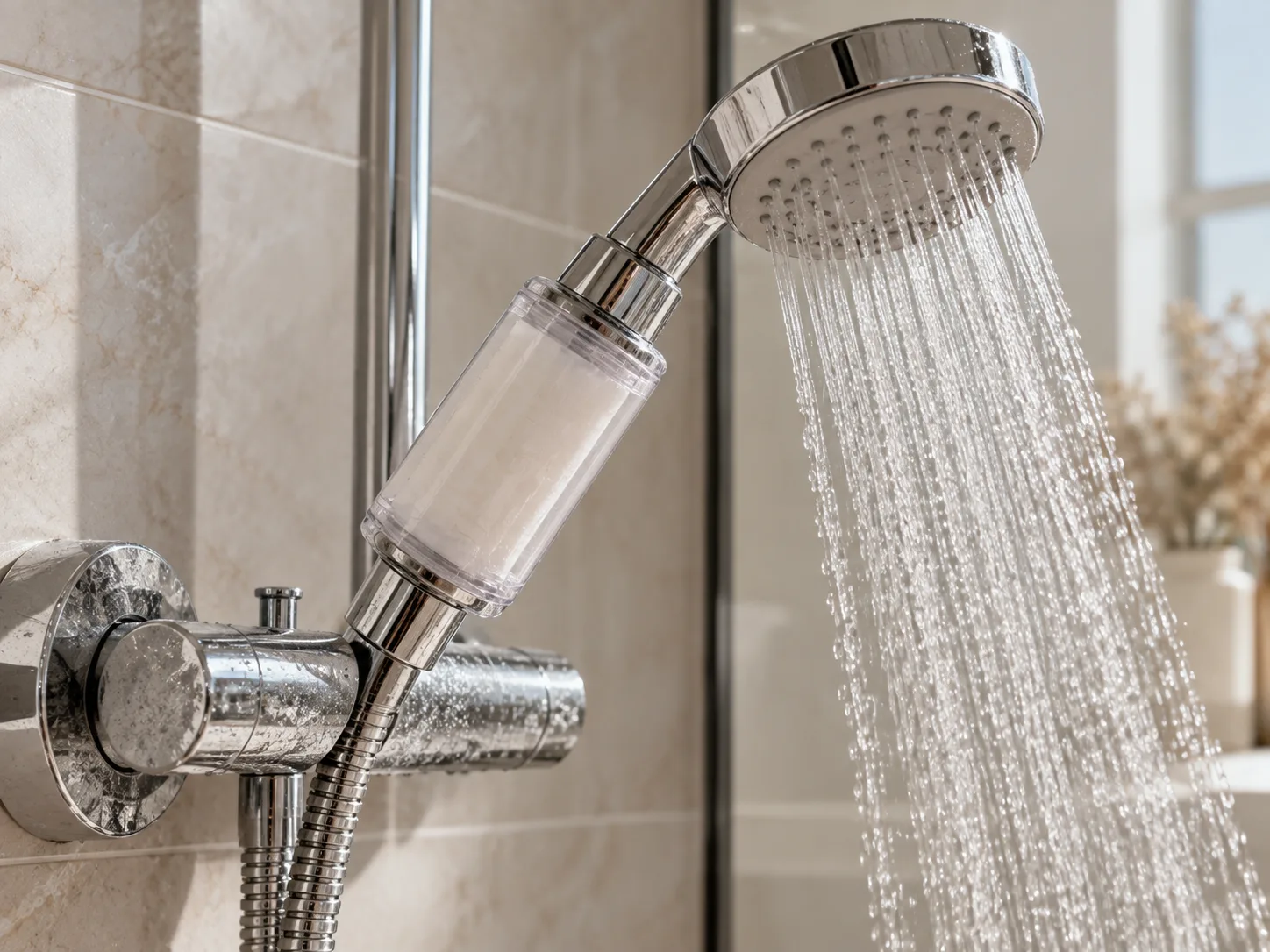
- A shower filter. To be upfront: most inexpensive filters are good at removing chlorine but much less effective with calcium and magnesium. Before you buy, check what the manufacturer actually claims – water softening, or just chlorine removal.
- A final rinse with soft water. Filtered, or boiled and cooled water – only for the last rinse of the lengths. It sounds like a hassle, but it’s one litre and half a minute.
- An acidic rinse. A tablespoon of apple cider vinegar in a litre of water once a week helps dissolve some of the deposits and smooth the cuticle. Not more often than that – it will dry the hair out.
- Deep cleansing – with care. Clarifying shampoos remove mineral build-up, but they also strip colour faster than regular ones. For coloured hair, no more than once every 2–3 weeks, and always follow with a mask.
Chlorine and UV
More on these below, in the section on sun and pools. Just one note here: together with hard water, these are three factors that act at the same time and make each other worse.
How often to wash coloured hair, and with what water
Wait at least 48–72 hours after dyeing before the first wash. That gives the cuticle time to close and the pigment time to settle into the fibre. Wash the very next morning, and you’ll simply rinse some of that fresh colour down the drain.
After that, roughly 2–3 times a week. Every wash takes a little pigment with it, so the less often, the better for your colour. If your scalp gets oily quickly, you can wash just the roots and skip shampooing the lengths – the lather running down will clean them anyway.
Water temperature – warm, not hot. Final rinse – cool. Don’t rub your hair with a towel; gently squeeze it instead. Wet cuticle is especially vulnerable, and friction lifts the scales just like hot water does.

Caring for the lengths after colouring
Colouring is a chemical treatment, even when the dye is labelled “gentle”. Afterwards the hair is more porous: the cuticle has more micro-damage, it loses moisture faster and holds colour less well. The conditioner in the dye kit is meant for a single use. From then on, the lengths need regular care that fills in that damage.
This is where hydrolysed collagen works well. Its molecules are broken down into short peptides, so they settle on the surface of the hair and partly penetrate the cuticle, filling in damaged areas. The cuticle lies flatter – hair breaks less, detangles more easily, and the colour looks deeper, because light reflects off a smooth surface instead of scattering.
Let’s be clear about what collagen won’t do: it won’t return your hair to its pre-colour state, and it won’t rebuild chemically broken bonds. The effect builds up over time – the first changes usually show after 2–3 weeks of regular use.
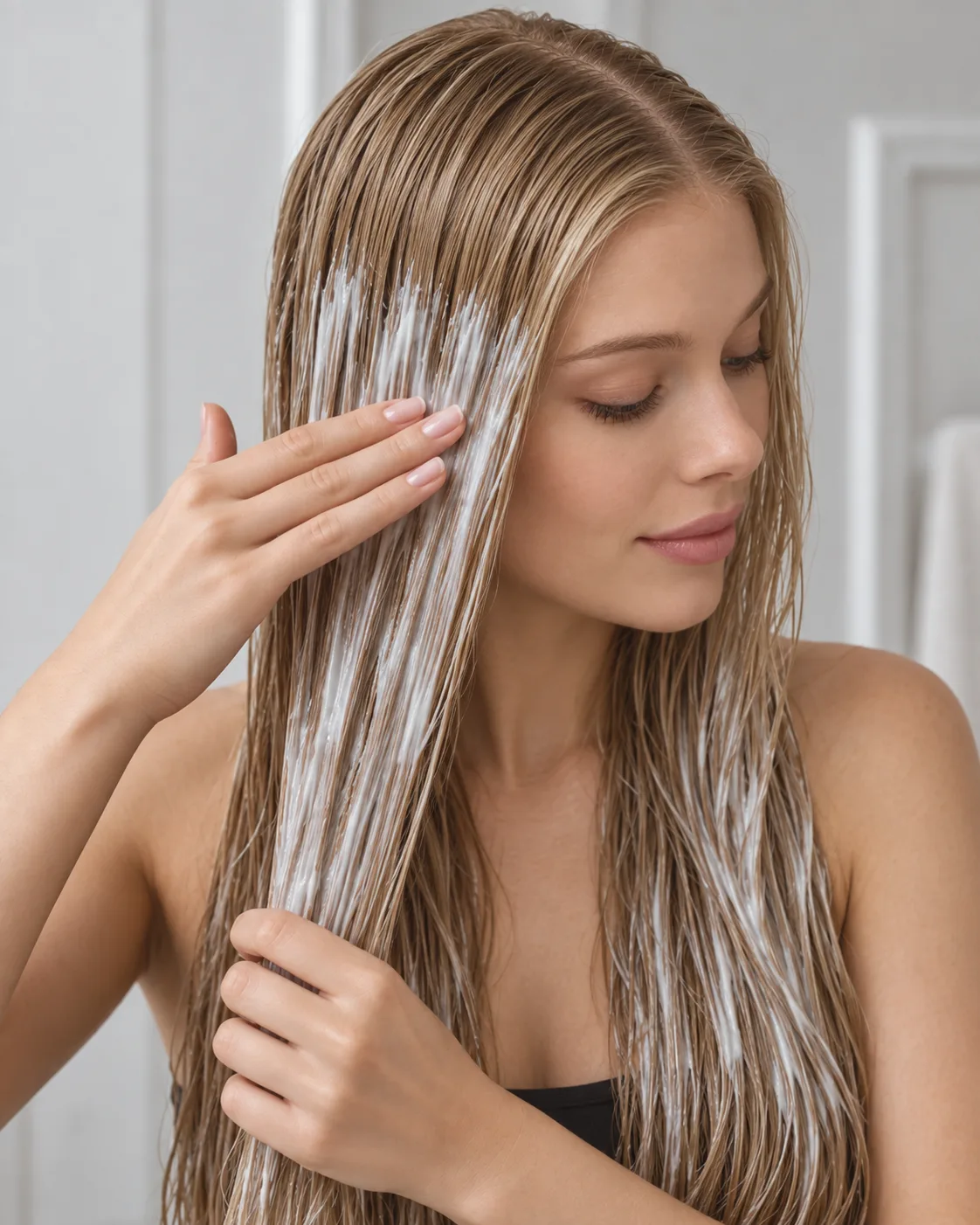
Apply the mask 1–2 times a week to damp, lightly squeezed lengths, keeping away from the roots. Leave it on for as long as the packaging says. If your hair is bleached, it’s worth reading about repairing hair after bleaching too – the care there is a little different.
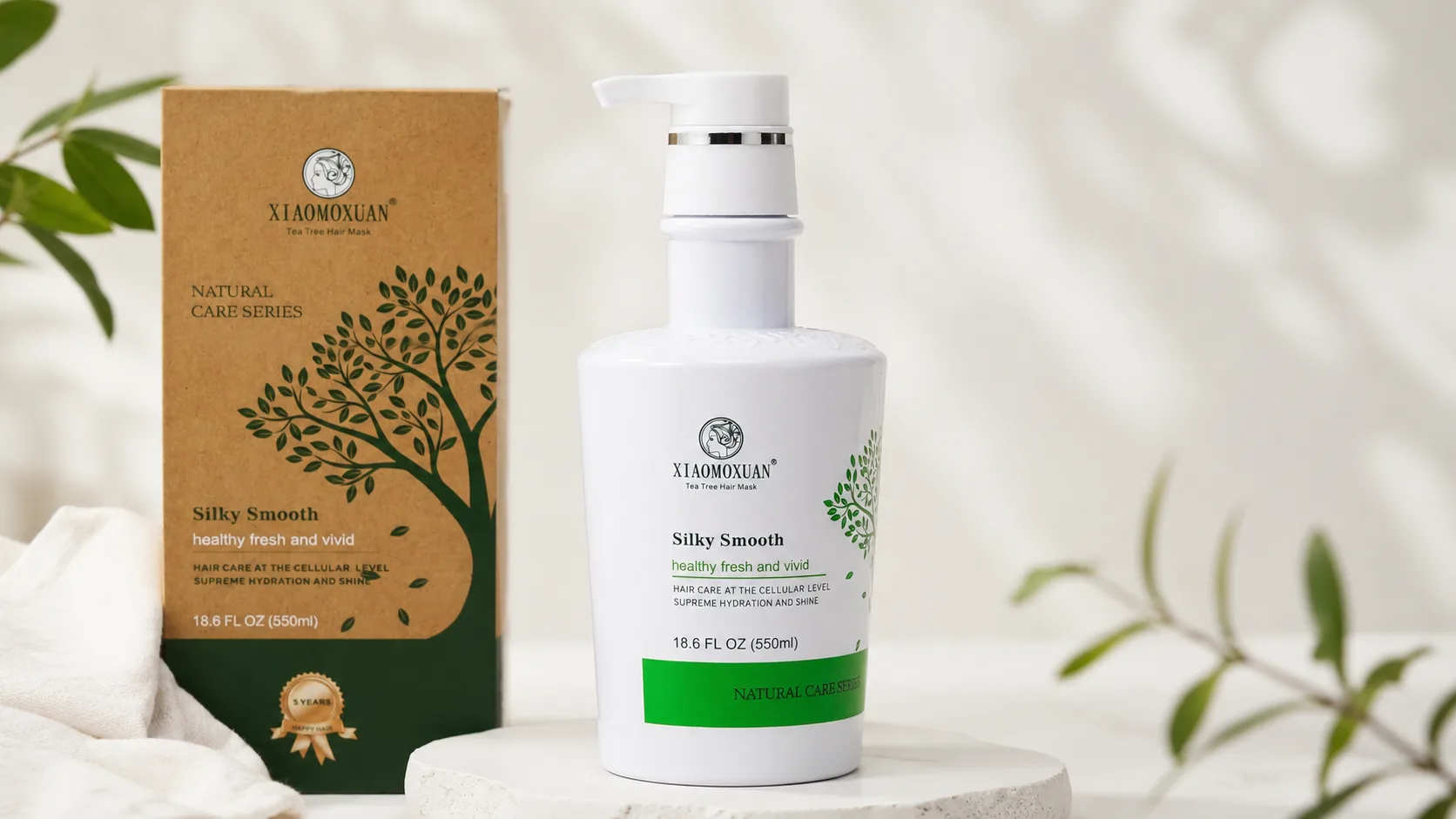
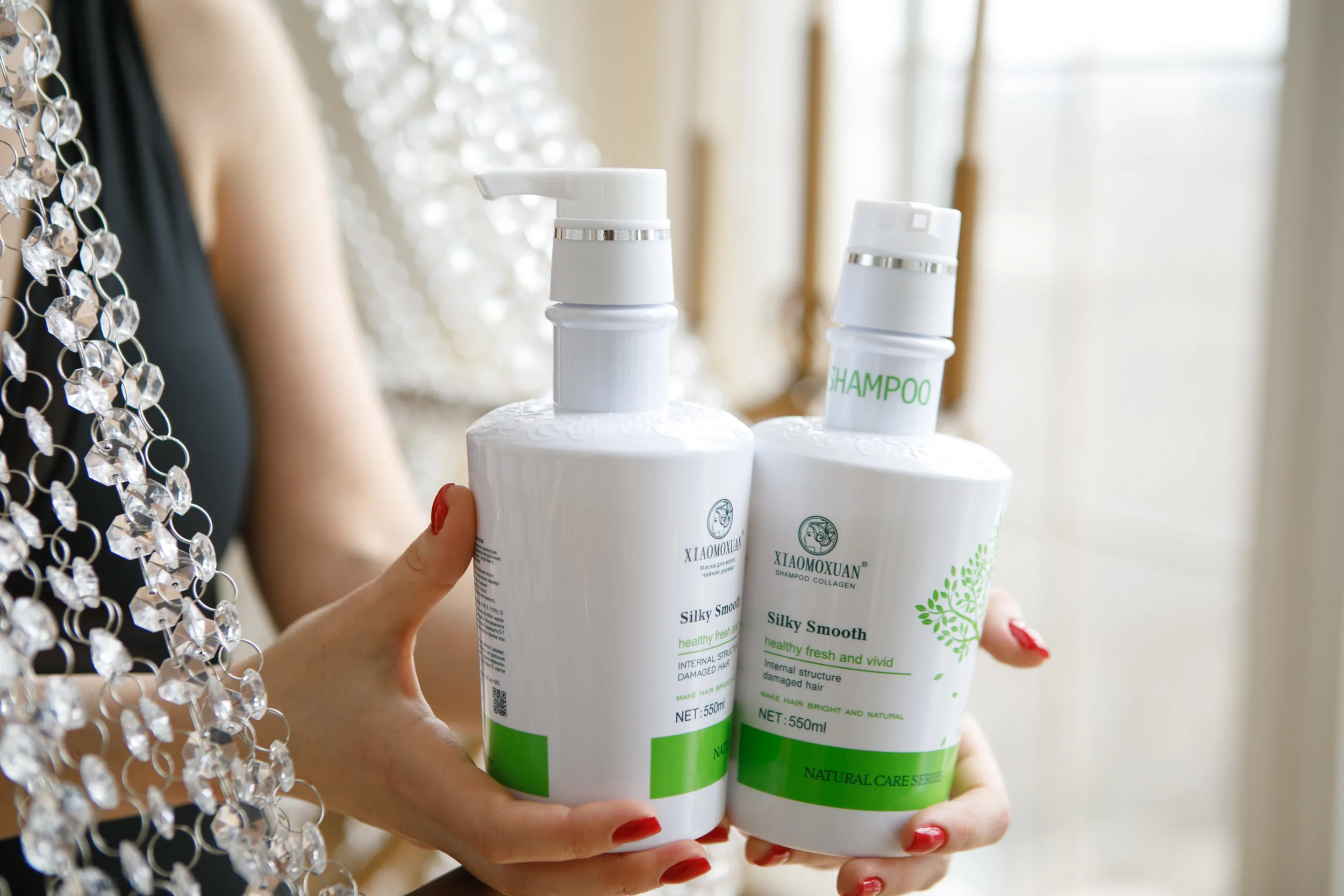
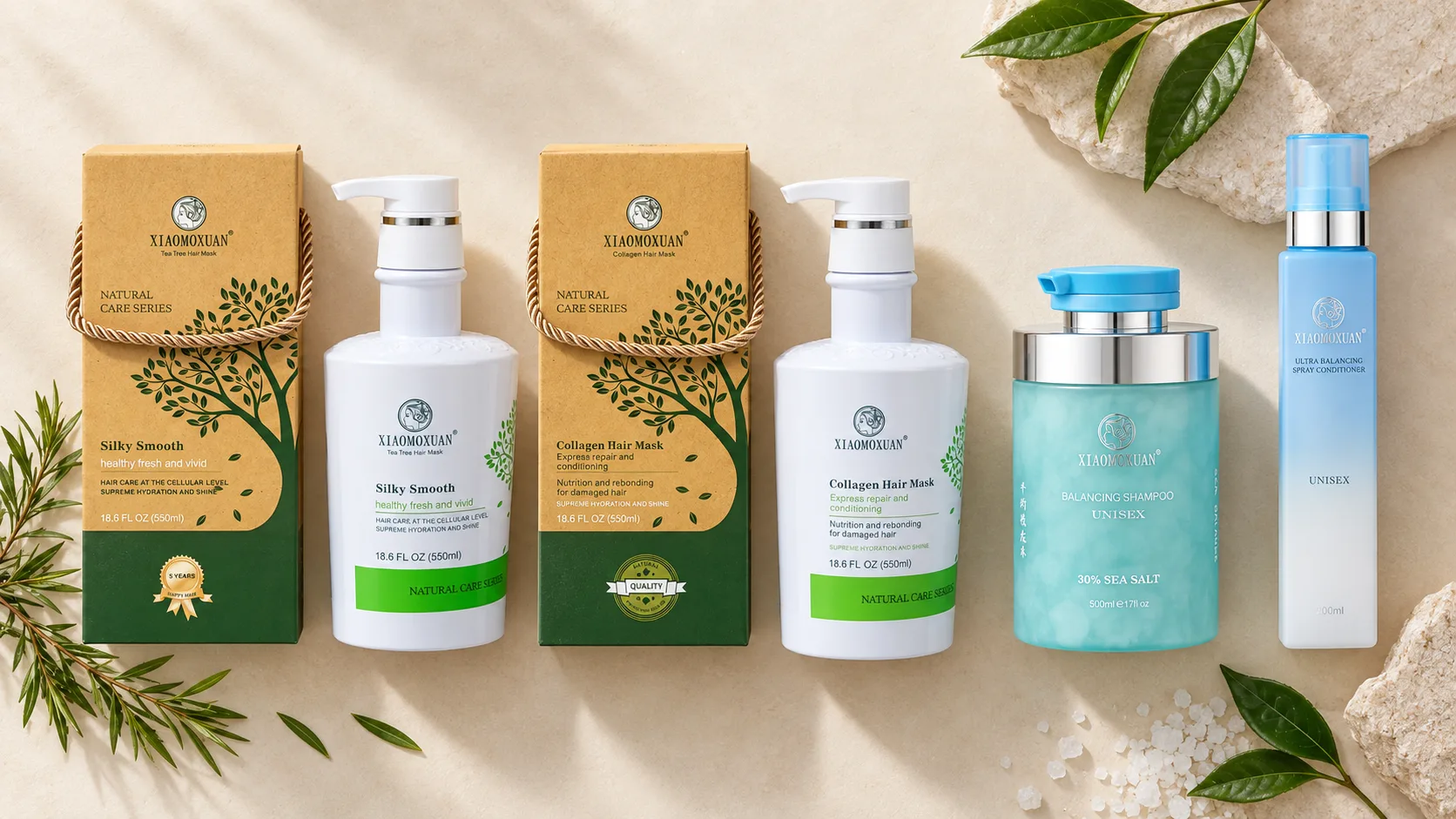
Xiaomoxuan Collagen Hair Mask 550 ml
Hydrolysed collagen for porous, colour-treated lengths: less breakage, easier detangling. Delivery across the EU.
Sun, chlorine and sea water: protecting your colour in summer
UV oxidises pigment – both artificial and natural. Coloured hair fades noticeably faster in the sun: after a few weeks of strong sunshine, a cool shade can turn warmer and a dark one can lighten by half a tone. The simplest protection is a hat whenever you’re out in the sun for a long time. Leave-in products with UV filters help too, but you need to reapply them after swimming.
Pool chlorine opens the cuticle and dries hair out, and it can give light shades a greenish tinge. A trick that really works: wet your hair with clean shower water before getting in the pool. Hair that’s already full of water soaks up less of the chlorinated kind. Rinse straight after swimming.
Sea salt dehydrates the lengths, so after the beach it’s worth rinsing your hair with fresh water rather than waiting until the evening.
We won’t go into heat styling separately here – a flat iron needs protection after colouring just as much as before. For how to choose a product for your hairdryer, straightener or curling iron, see our article on heat protection for hair.
Myths about caring for coloured hair
“Conditioner washes colour out.” Quite the opposite. Conditioner smooths the cuticle after shampooing, which makes it harder for pigment to escape. The only problem is very rich, oily products applied straight after dyeing – in that case, wait until the first wash.
“Coloured hair should be washed every day with a special shampoo.” Even the mildest shampoo, used daily, will remove more colour than a stronger one used every three days. How often you wash matters as much as what’s in the bottle.
“You don’t need a mask – the dye kit already comes with conditioner.” The kit conditioner closes the cuticle after colouring, and that’s it. It won’t carry you through the next 4–8 weeks while the colour lasts.
Frequently asked questions
How long does hair dye last?
Permanent dye usually lasts 4–8 weeks, toners 2 to 4 weeks. It depends on hair porosity, how often you wash, water temperature, water hardness and sun exposure. Red and copper shades fade faster than others.
When can I wash my hair for the first time after colouring?
No sooner than 48–72 hours. During that time the cuticle closes and the pigment settles better into the fibre. Use warm, not hot, water for the first wash.
Does a shower filter help with hard water?
It depends on the filter. Most inexpensive models remove chlorine but have little effect on calcium and magnesium. If hardness is the real problem, look for a filter that specifically claims water softening, or use filtered water at least for the final rinse of the lengths.
How often should I use a mask on coloured hair?
1–2 times a week, on damp, squeezed-out lengths. For heavily bleached or porous hair you can use it more often in the first weeks after colouring, then go back to your usual routine.
Care for coloured lengths – the Collagen line
A hydrolysed collagen mask for porous hair after colouring and bleaching. Delivery across the EU.
Want tips on hair and body care to show up first?
One click — and Google will more often show you Xiaomoxuan's articles and tips (including in AI search), when you're looking for advice on hair care, body care, or choosing cosmetics.
Button didn't appear? Add us as a preferred source here →