
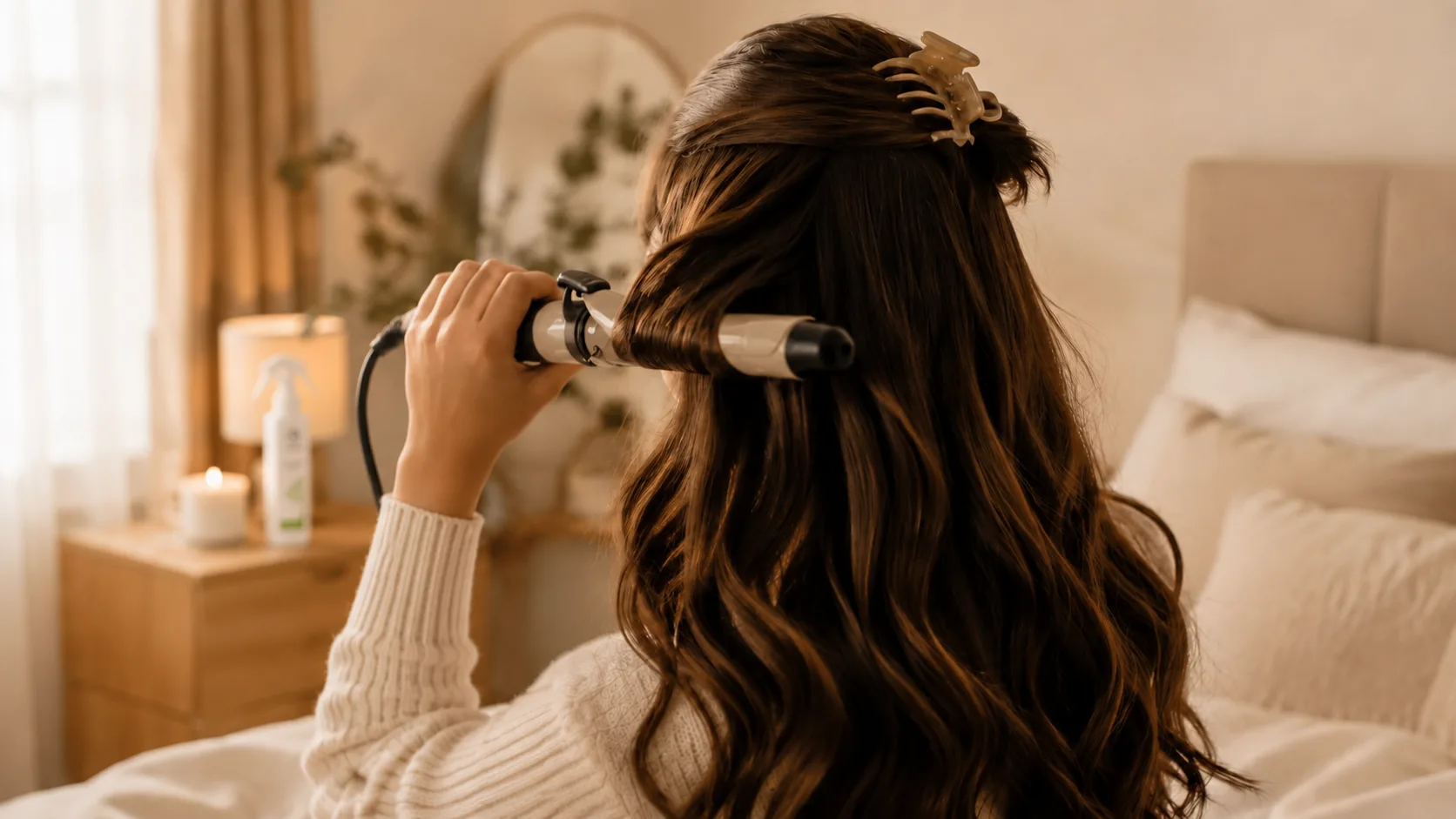
Blow dryer, straightener, or curling iron – each of these tools affects hair differently. Temperature, contact time, how damp your hair is when you style it – all of that determines which heat protectant you actually need, and which one just smells nice and does nothing.
This is a companion piece to our full heat protection guide – that one covers the damage mechanism in detail, the complete list of active ingredients, and the step-by-step application ritual. Here, we’re focused specifically on how to choose a product for your styling tool: Heat Protection for Hair: The Complete Guide.
Why the Tool Matters More Than Hair Type Alone
Heat protection isn’t one universal product that works for everything (for exactly how it works, see our complete heat protection guide). What matters for choosing one isn’t the formula alone, but the tool: what works for blow-drying might not be enough for straightening at 220°C. And a product made for intensive heat styling will be too heavy for fine hair that’s just blow-dried with no styling at all.
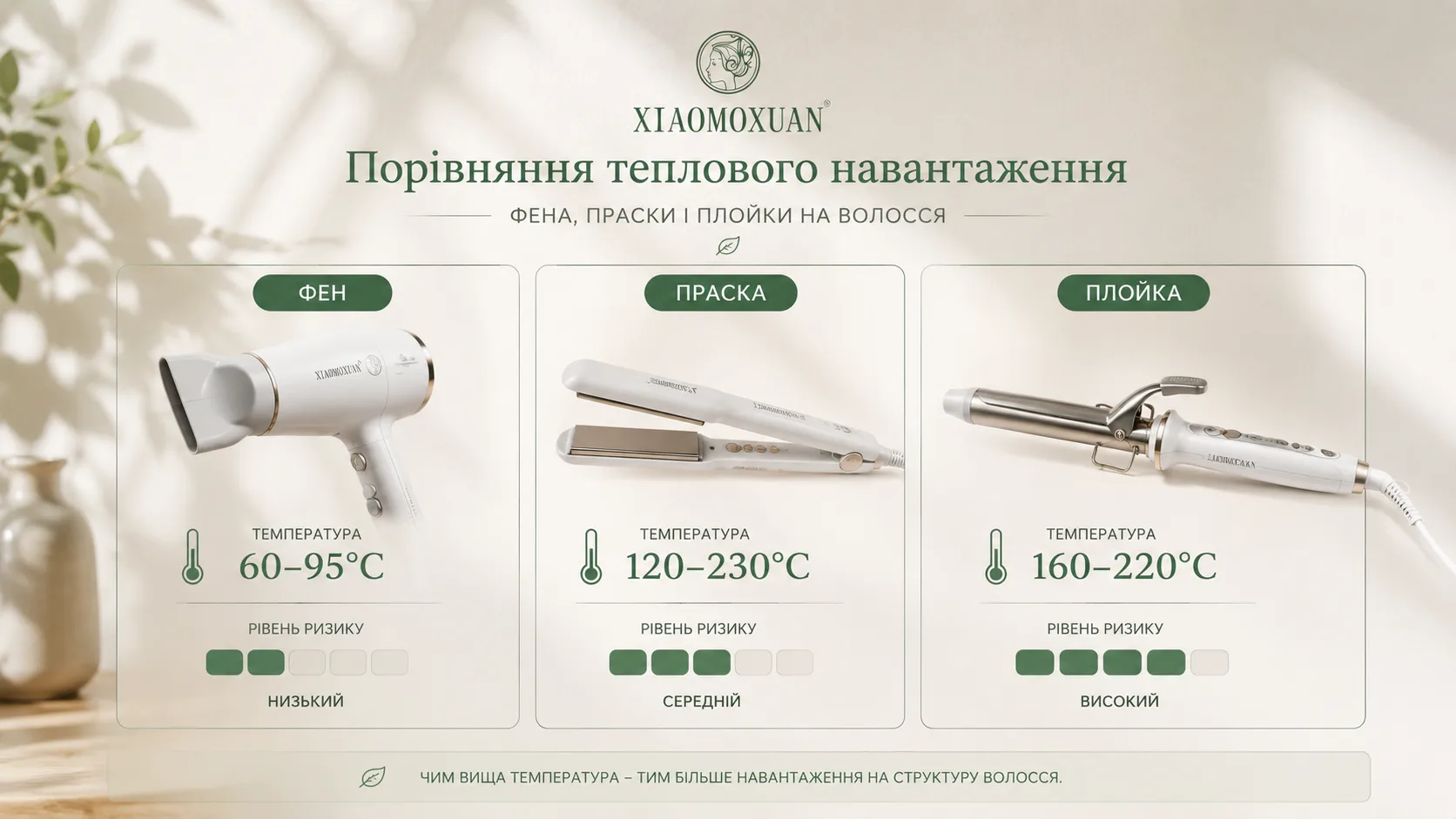
Blow Dryer: The Most Common, Most Underrated Risk
A blow dryer looks like the gentlest form of heat exposure – which is exactly why people skip protection with it most often.
The problem isn’t one blow-dry session. A dryer is a daily tool. Temperatures of 60–80°C, used regularly, gradually break down the keratin structure of the hair fiber. Ends dry out, porosity increases, and hair starts absorbing moisture from the air and frizzing.
What you need: a light leave-in with heat protection that won’t weigh hair down. Apply to damp hair before drying – not dry hair, because by then there’s nothing left to seal.
Important: dry hair from at least 15–20 cm away from the scalp, and keep the dryer moving – don’t hold it still on one spot.
Straightener: The Highest Temperature Risk
A hair straightener is the only tool where temperature can go past 200°C. At that heat, the hair fiber literally loses water from the inside, the cuticle lifts, and hair turns rough and brittle.
Heat protection here needs a clearly stated temperature limit (protection up to 230°C isn’t marketing – it’s an actual property of the formula), applied evenly to dry or slightly damp hair. Wet hair plus a straightener means steam trapped inside the fiber – and that’s worse than using no protection at all.
The optimal straightener temperature for most hair types is 180–200°C. For colored or damaged hair, stay under 180°C.
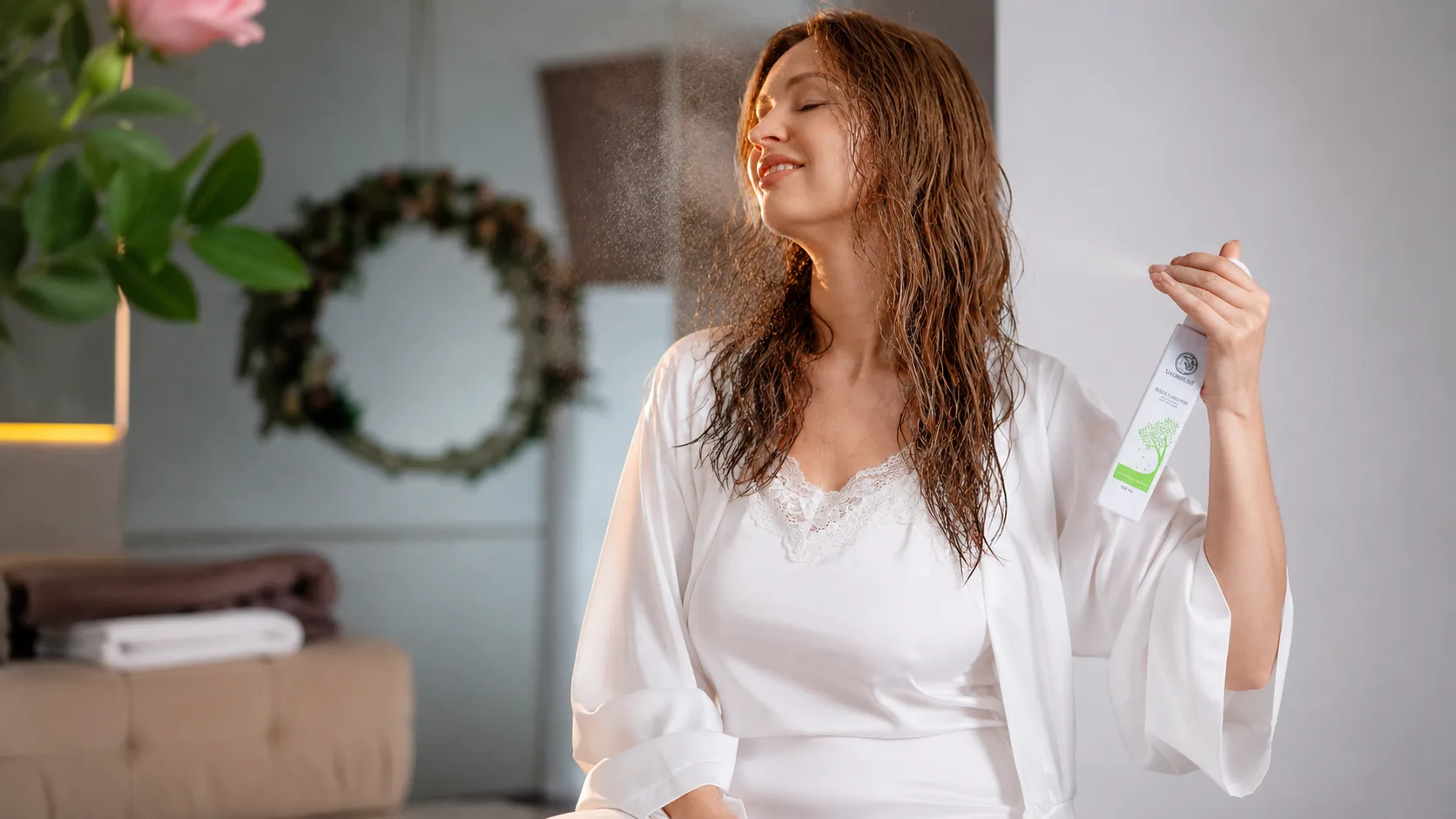
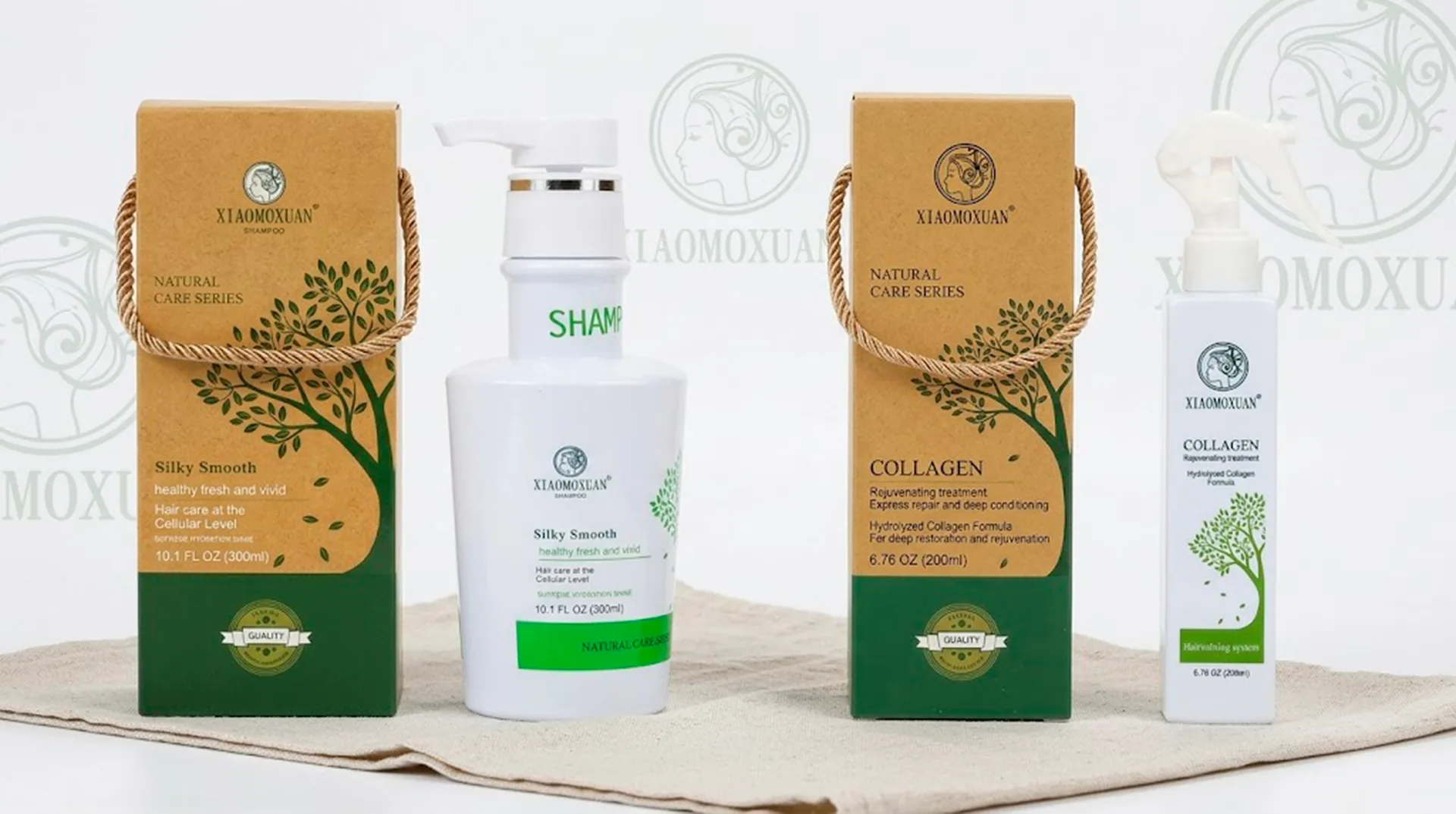
Silky Smooth Spray by Xiaomoxuan – Leave-In Care After Straightening
Repairs fiber structure after heat exposure. Applies to both dry and damp hair, no rinsing. Delivery across Europe.
Curling Iron: Localized Overheating
Unlike a straightener, a curling iron works locally – on smaller sections, but with longer contact time. One section can overheat while the rest of the hair waits its turn.
For curling, it’s not just heat protection that matters – how hydrated your hair is beforehand matters too. Dry hair breaks more often when curled, regardless of whether you use protection.
The routine:
hydrating mask the day before curling → light leave-in before the curling iron → nourishing mask 2–3 days after.
Summer: The Extra Factor People Forget
In summer, UV exposure adds to the heat load from styling tools. UV rays break down keratin and oxidize pigment – colored hair fades faster, but natural color shifts gradually too.
Chlorine from a pool also changes the structure of the hair fiber: it opens the cuticle, and after that hair becomes far more vulnerable to whatever comes next – heat or mechanical stress alike.
The practical takeaway for heat styling specifically: if your hair was just in a pool or out in the sun for a long time, hold off on the straightener or curling iron for a day or two. A cuticle opened by chlorine can’t handle more heat without a real risk of breakage – repair the structure with a mask first, then go back to your usual styling.
Frequently Asked Questions About Choosing Heat Protection by Tool
Can I use the same leave-in spray for a curling iron if I have curly hair?
Yes, as long as the spray holds up at curling-iron temperatures (200°C and above – check the label). For curly hair, hydration before styling matters more than the product itself: dry curly hair breaks when curled even with heat protection on. Apply to slightly damp hair before the curling iron and let it air-dry or use a diffuser – that cuts damage risk far more than switching sprays.
Do I need more product for a straightener than for a blow dryer?
The amount is the same – the way you apply it is what differs. For a blow dryer, distribute it through the length before drying, since hair keeps moving and drying gradually. For a straightener, the product needs to evenly coat every section before it touches the hot plate, so apply it section by section and check nothing was missed – that’s where damage happens most often.
What’s the maximum safe straightener temperature for colored hair?
No higher than 180°C. Colored hair already has a cuticle weakened by the dye, and at higher temperatures color fades faster while the cuticle opens more and takes longer to close back up.
Does a hair mask protect against heat?
A mask prepares hair for heat exposure – it hydrates and strengthens the structure. But it rinses out, so it doesn’t replace leave-in heat protection. Mask plus leave-in product is the right order, not either/or.
Read also:
Heat Protection for Hair: The Complete Guide – damage mechanism, full list of active ingredients, and step-by-step application ritual.
Collagen for Hair: What It Actually Does and How to Choose a Product – more on hydrolyzed collagen, which repairs structure after heat exposure.
Tea Tree Hair Mask Silky Smooth – for unruly, frizzy, or root-oily hair.
Care After Heat Styling – The Collagen Line
Shampoo, mask, and leave-in products based on hydrolyzed collagen. For colored, over-dried, and heat-damaged hair. Delivery to 17 EU countries.