Collagen for Hair: What It Actually Does and How to Choose a Product
Collagen for Hair: How It Works in Hair Care and Who Should Pay Attention to It
Collagen has been a familiar name in hair cosmetics for a while now. But the word Collagen on a label still doesn’t tell you much about the result. Hair condition isn’t shaped by one single ingredient – it’s the whole formula: moisturizing, conditioning, softening and protective components all have to work together. Here’s what role collagen can actually play in hair care, which hair types benefit most from these formulas, and what to check in the INCI list before you pick a collagen mask.
What a Collagen Mask Can Actually Do
A collagen mask is cosmetic care, not a way to permanently bring damaged hair back to its original state. Here’s the honest answer on what it delivers:
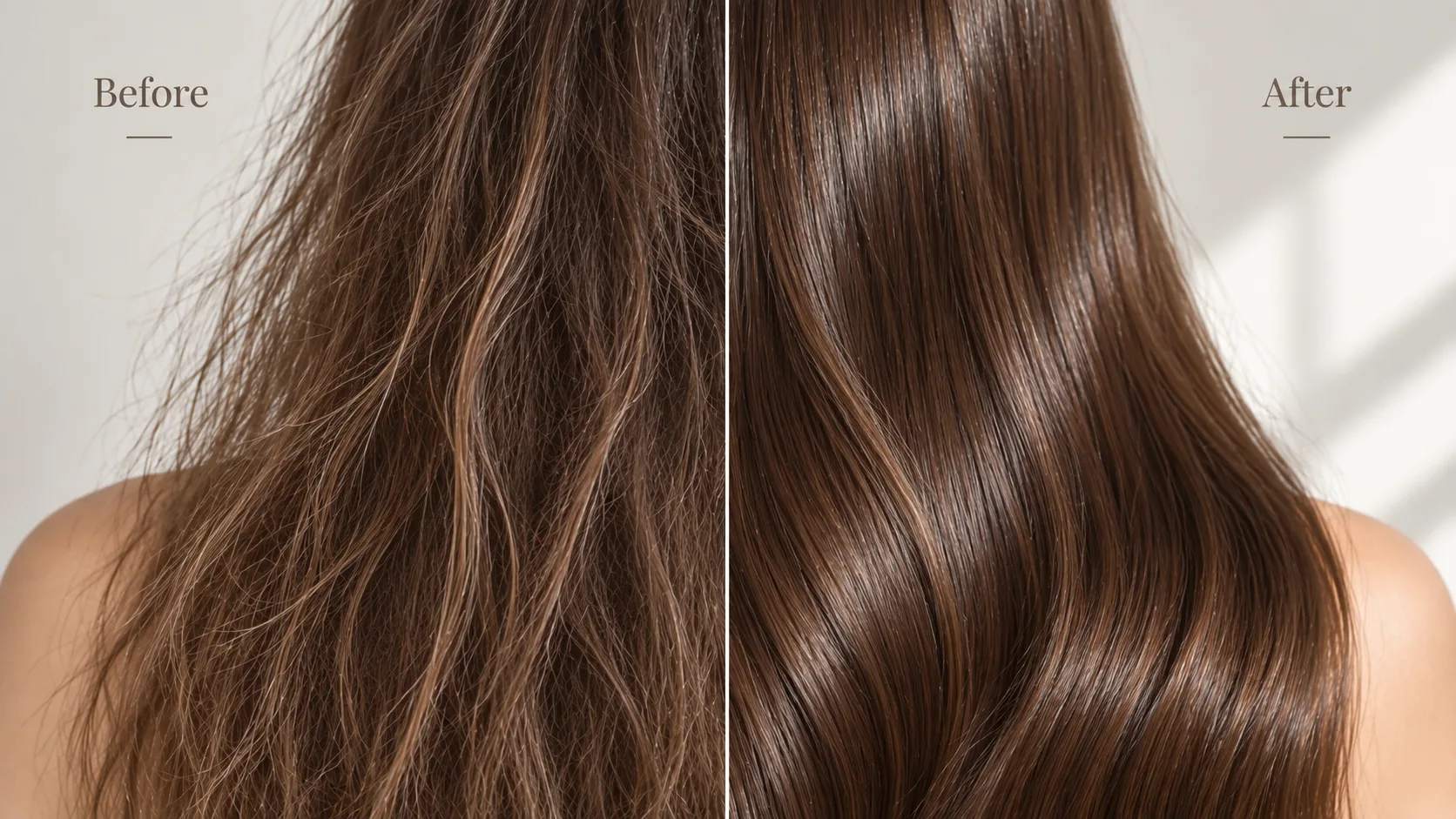
Gives you: less breakage, easier detangling, more shine, a softer texture. The effect is most noticeable on damaged, porous and colored hair, where the cuticle structure is already compromised.
Doesn’t give you: repair of chemically broken bonds, a change in hair type, or a long-term increase in density. If a product promises “full recovery after one use” – that’s marketing, not chemistry.
How Collagen Works in Hair Cosmetics
Collagen is a protein ingredient used in hair care formulas. In cosmetics, its main job is conditioning the hair surface. Collagen-based formulas can make hair feel softer, smoother and more pleasant to the touch, and make it easier to detangle.
The difference shows up most clearly on hair whose surface has already become uneven – from coloring, lightening, regular use of heat tools, or natural porosity.
That said, it doesn’t make sense to judge a mask by one ingredient alone. The combination of components around the collagen tells you far more about the product.
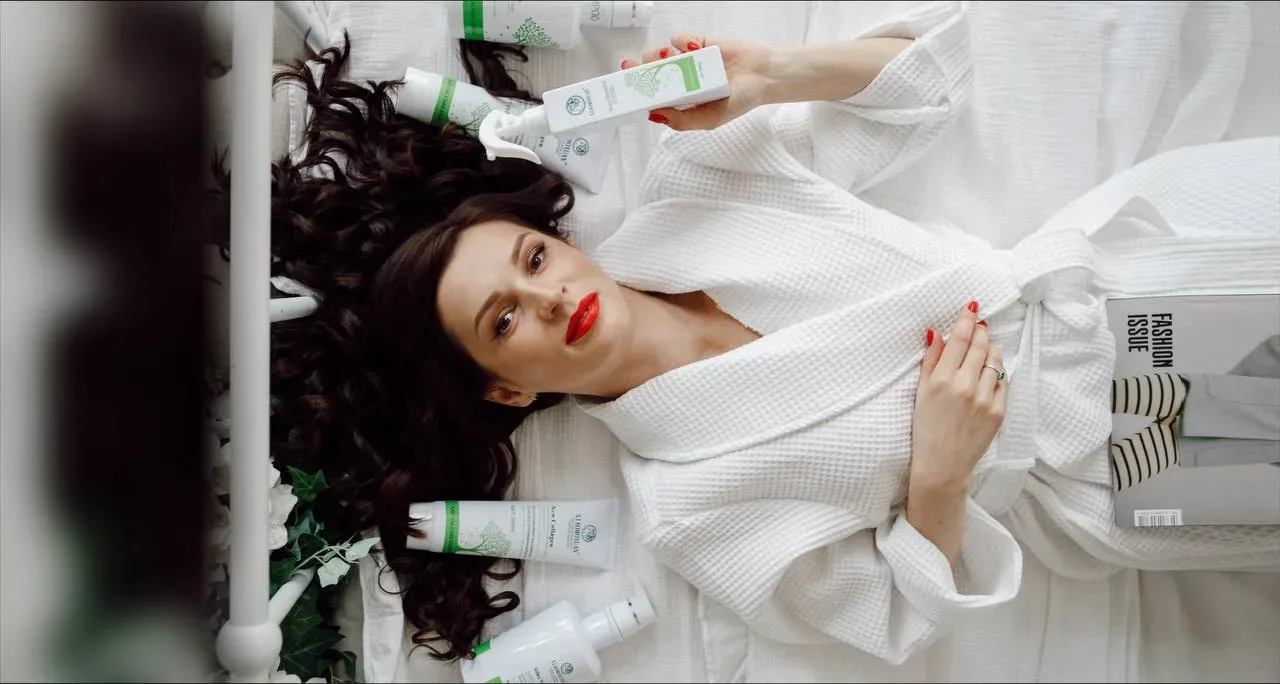
Xiaomoxuan Collagen – Complete Care, Not a Single Active
Shampoo, mask and leave-in products for damaged and colored hair. Delivery across Europe.
How to Read the INCI of a Collagen Mask
One common mistake is trying to judge a mask’s quality just by where Collagen sits in the INCI list. A cosmetic formula needs to be read as a whole.
Ingredients above a certain concentration threshold are listed in descending order, but those present in small amounts don’t necessarily follow strict order by quantity. So an ingredient’s position alone can’t tell you its exact percentage or predict how well the finished formula performs.
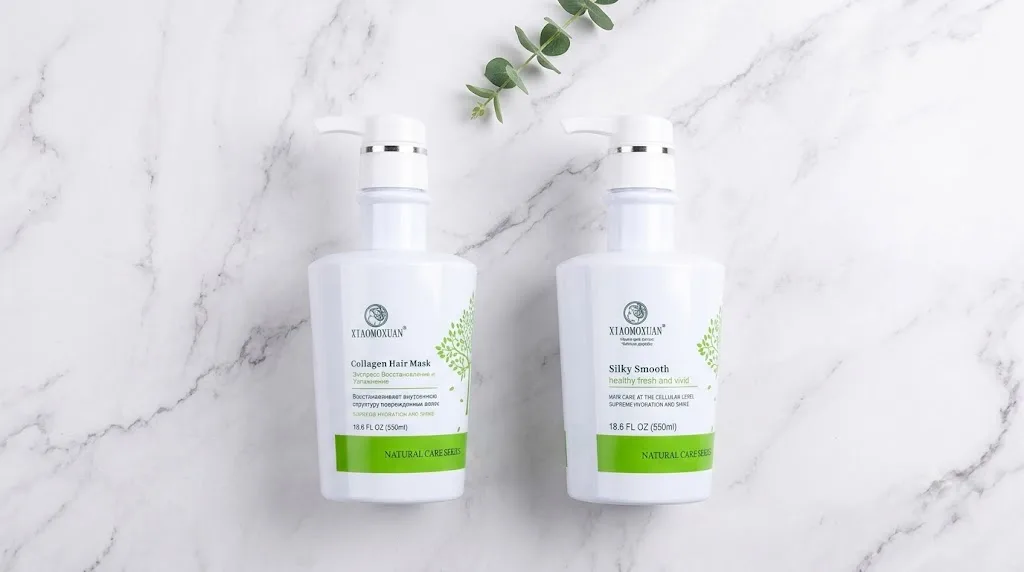
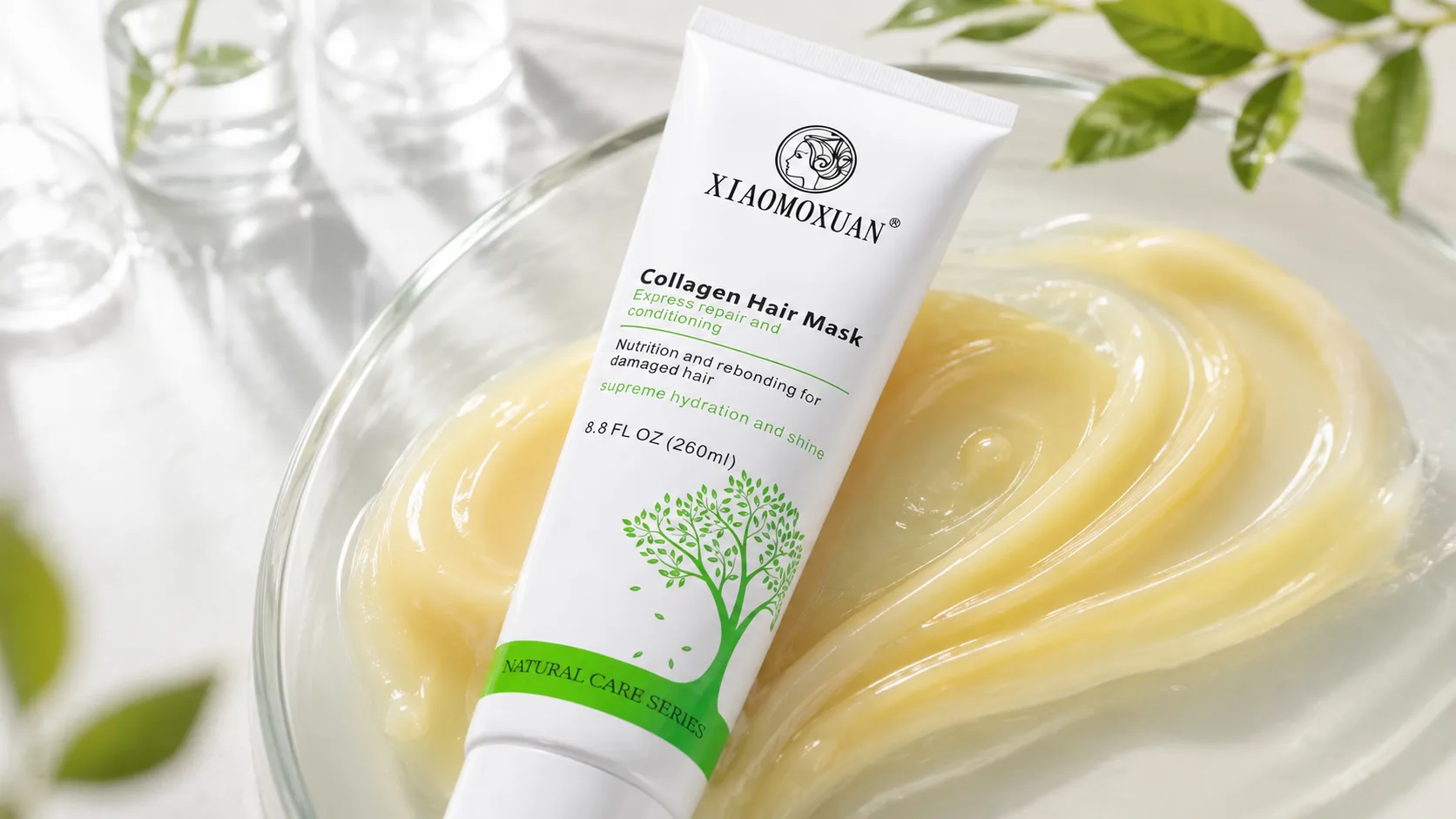
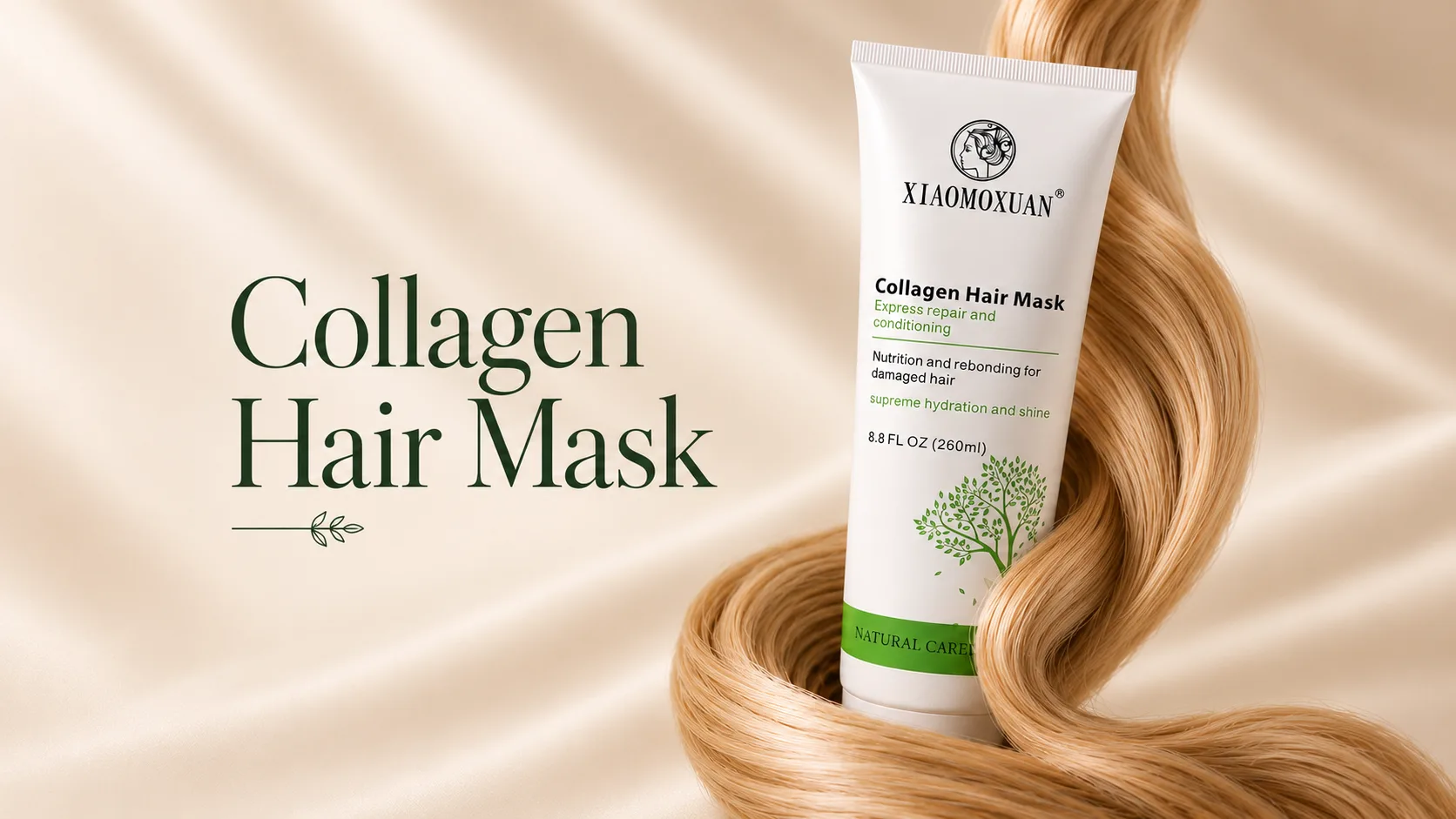
It’s far more useful to look at what sits around it. In Xiaomoxuan Collagen Hair Mask, the formula includes more than just Collagen:
Glycerin – helps maintain moisture;
Sodium PCA – part of the skin’s natural moisturizing complex;
Sodium Hyaluronate – helps maintain a feeling of hydration;
Ceramide AP – supports care for dry, damaged lengths;
Dimethicone – conditions the hair surface, adding smoothness, slip and shine.
So when choosing a product, it’s worth asking not just “is there collagen in it?” but “what formula is it actually working in?”
Who Needs Collagen for Hair
Colored hair. Coloring changes the state of the cuticle and can leave hair more porous, dry and demanding to care for. A formula with collagen plus moisturizing and conditioning ingredients helps smooth the hair surface, maintain softness and make lengths easier to manage.
Hair after frequent heat styling. Frequent use of a blow-dryer, flat iron or curling iron can gradually increase dryness and breakage along the lengths. A collagen mask in that routine helps maintain smoothness and softness, but it’s worth remembering: a mask doesn’t replace heat protection.
Lightened hair. After lightening, hair often becomes more porous, dry and sensitive to mechanical stress. That’s exactly why regular conditioning care matters so much here. A collagen mask can be one step in that routine, helping maintain softness, smoothness and a more cared-for look along the lengths.
Dry and porous hair. Dryness isn’t always linked to coloring. It can be a natural trait of the hair, or it can build up from frequent washing, styling, sun exposure or dry air. In this case, it’s not about finding one “miracle” ingredient – it’s about building a regular routine around moisturizing and conditioning components. And that’s exactly where complete collagen masks tend to work best.
Does Healthy Hair Need Collagen Too
You can use a collagen mask on hair without visible damage too – the difference will just be less dramatic. If your lengths are already smooth, elastic and easy to detangle, the result will be more of a maintenance effect: extra softness, conditioning and shine. For hair that doesn’t need intensive care, lighter formulas work fine, and it makes sense to focus mainly on what the scalp and lengths actually need.
Collagen and Silicones: Do You Have to Choose One
No. Collagen and silicones serve different functions in hair care and can easily coexist in one formula. Collagen works as a conditioning protein ingredient, while silicones – Dimethicone among them – work mainly on the hair’s surface: improving slip, smoothing the cuticle, helping control frizz and adding shine.
So a silicone in a mask doesn’t rule out collagen being there too. In Xiaomoxuan Collagen Hair Mask, Dimethicone is part of the formula, and its job is to support the mask’s conditioning effect.
If your daily routine involves a lot of styling products, dry shampoo or rich leave-in treatments, a more thorough cleanse can help every now and then. But you don’t need to scrub your hair squeaky clean before every use of a collagen mask. Collagen and silicones don’t get in each other’s way – in a well-built formula, they simply do different, complementary jobs.
Frequently Asked Questions About Collagen for Hair
Collagen in shampoo or in a mask – which works better?
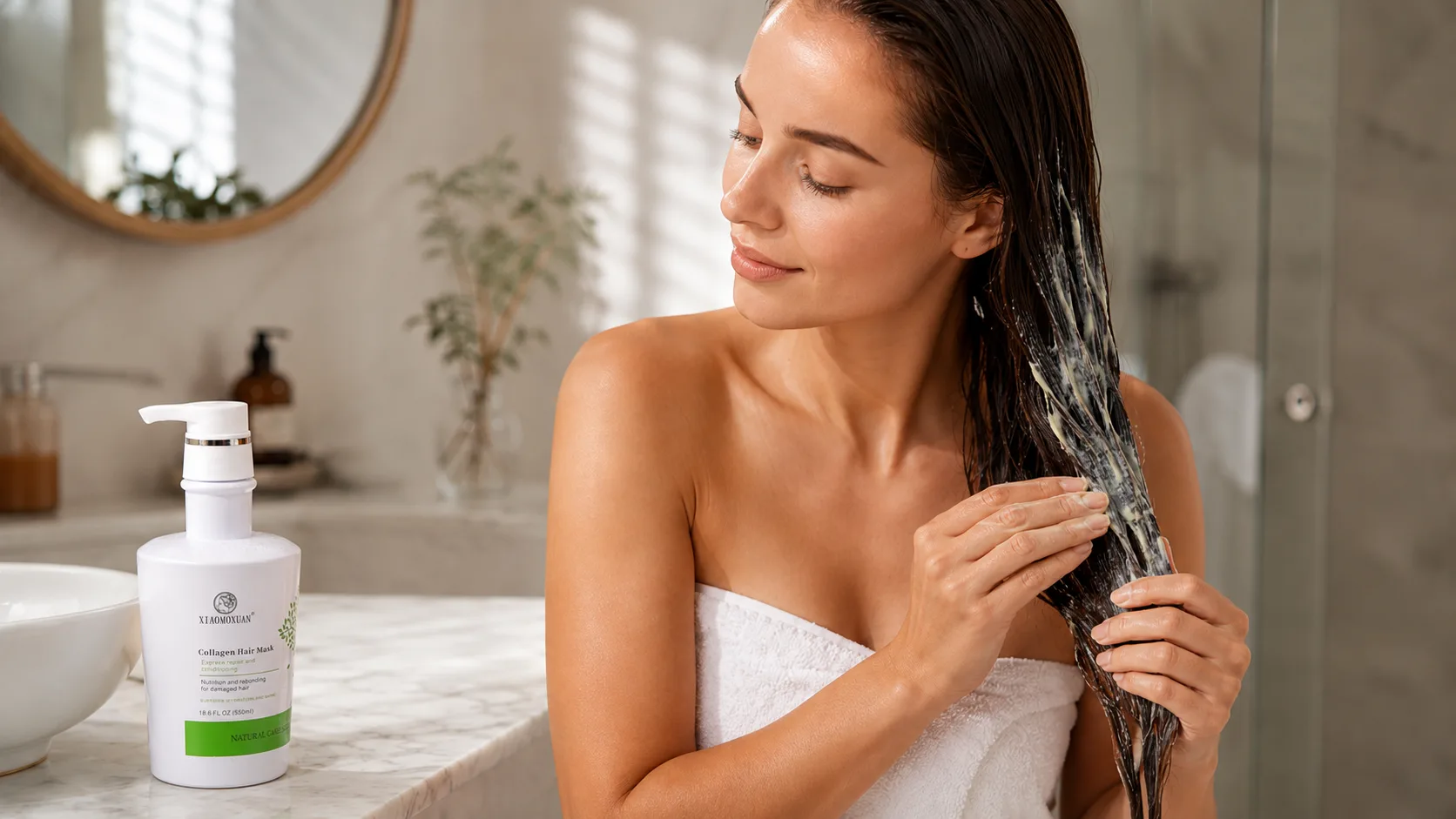
A mask. Shampoo rinses off fast – collagen simply doesn’t have time to work. A mask stays on the hair for 3–15 minutes, which gives active ingredients a chance to be absorbed. Collagen shampoo is a nice bonus, but the real effect comes from a mask or a leave-in product.
How often should you use a collagen mask?
For damaged and colored hair – 1–2 times a week. For maintenance care on healthy hair, once a week or less is enough. Using nourishing masks daily can weigh hair down, especially fine hair.
Does collagen replace keratin straightening?
No. Keratin straightening is a chemical treatment that changes the shape of the hair fiber. Collagen in cosmetics doesn’t change the structure at a molecular level – it fills in damage and improves texture. They’re two different goals with two different tools.
Is collagen suitable for oily hair?
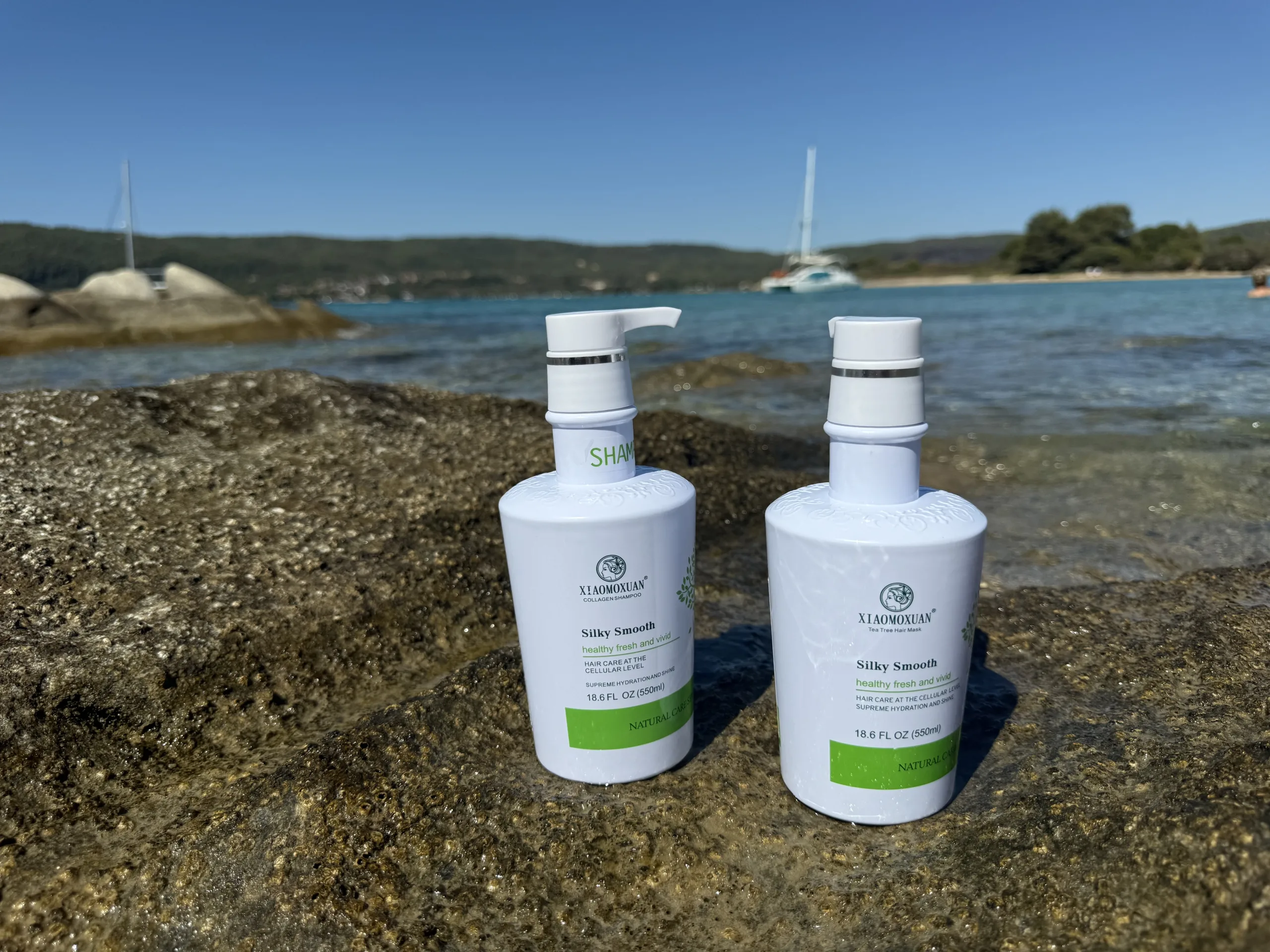
It depends on the formula. Heavy masks with a lot of oils can weigh down oily hair. If your scalp gets oily, apply the mask only to the lengths and ends, not the roots. Or try the Silky Smooth line – it’s built for a sensitive scalp prone to oiliness.
Can you combine Collagen and Silky Smooth from Xiaomoxuan?
Yes, it’s one of the most popular combinations: Silky Smooth shampoo (gentle, sulfate-free cleansing) + Collagen mask (repair and nourishment). It works well for combination hair – an oily scalp with dry, damaged ends.
You might also like:
Heat Protection for Hair: How to Choose the Right One for Your Styling Routine – blow-dryer, flat iron, curling iron, and how to protect the structure before breakage sets in.
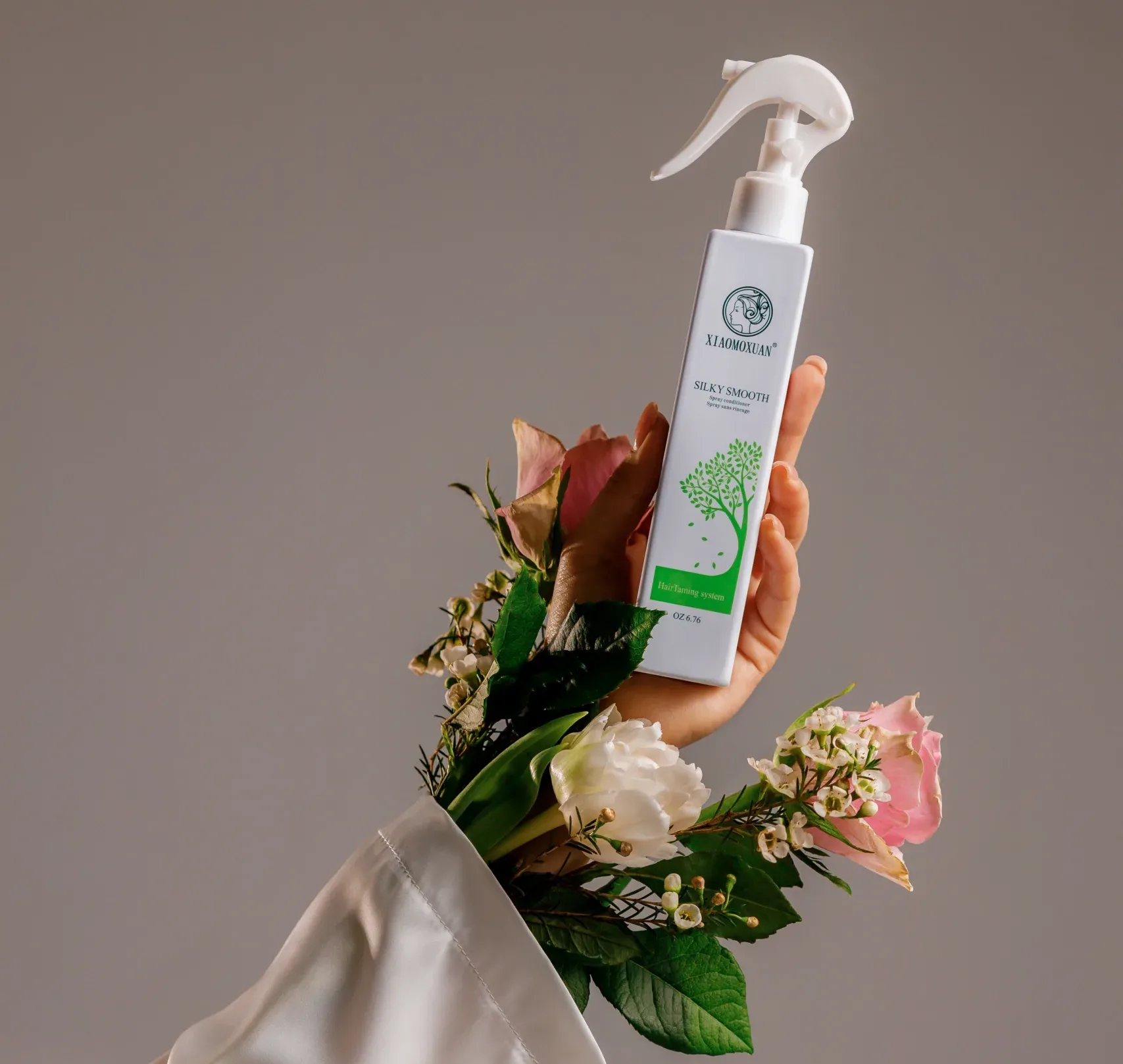
Tea Tree Hair Mask Silky Smooth – gentle, sulfate-free care for unruly, frizz-prone hair.
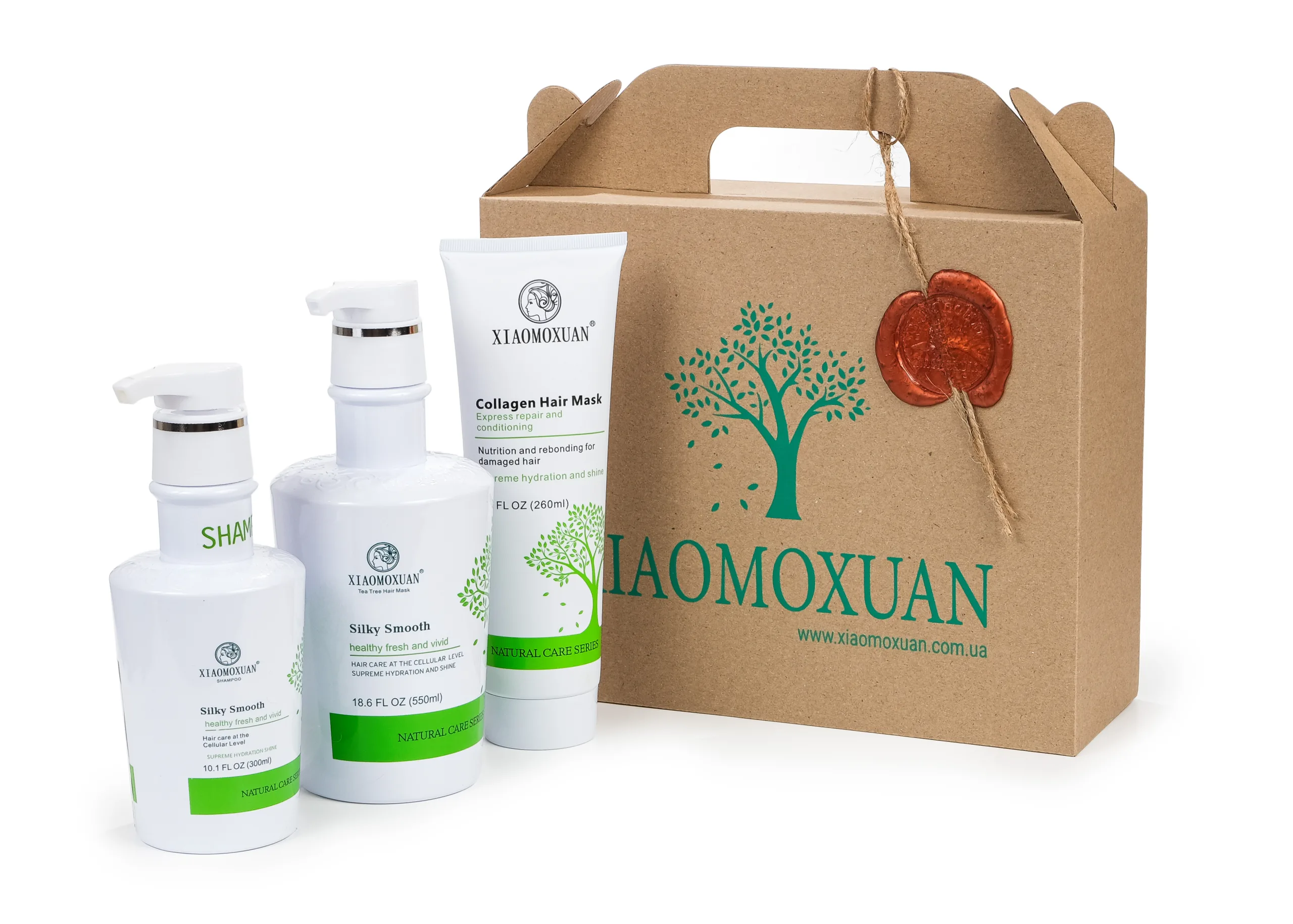
Collagen – Visible Results From the First Week
Shampoo, mask and leave-in products built on hydrolyzed collagen. Paraben-free. Delivery to 17 EU countries.
Want tips on hair and body care to show up first?
One click — and Google will more often show you Xiaomoxuan's articles and tips (including in AI search), when you're looking for advice on hair care, body care, or choosing cosmetics.
Button didn't appear? Add us as a preferred source here →