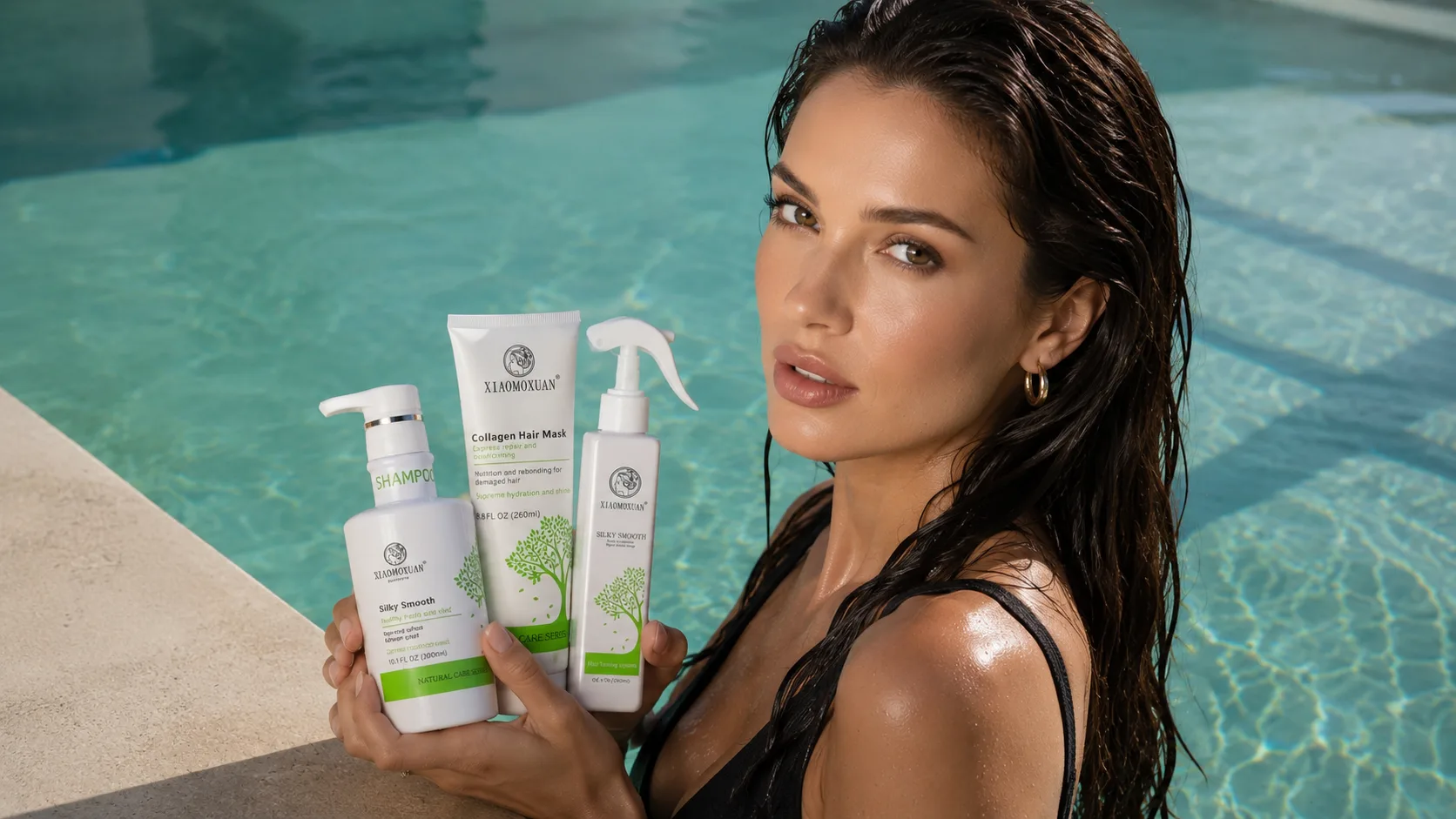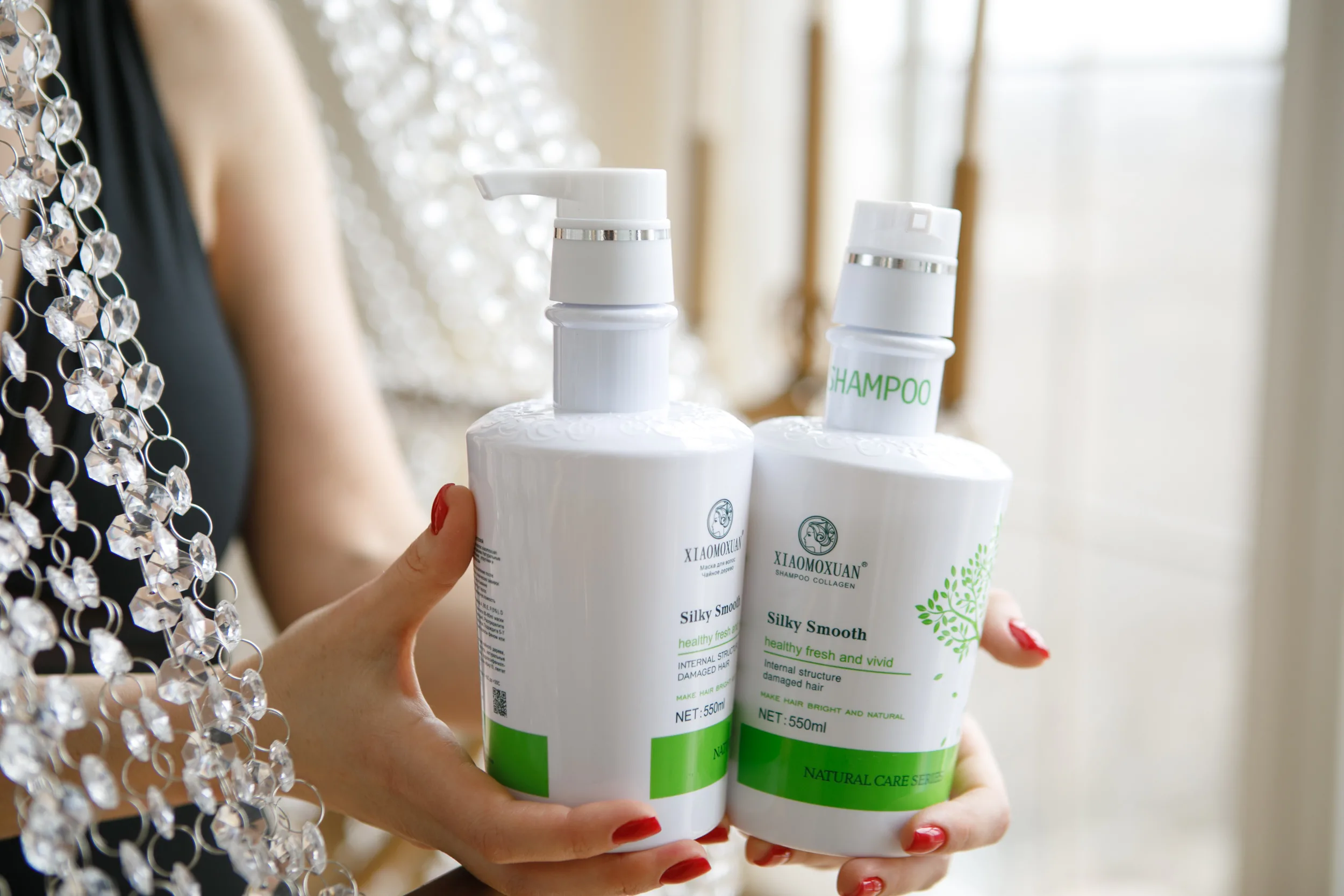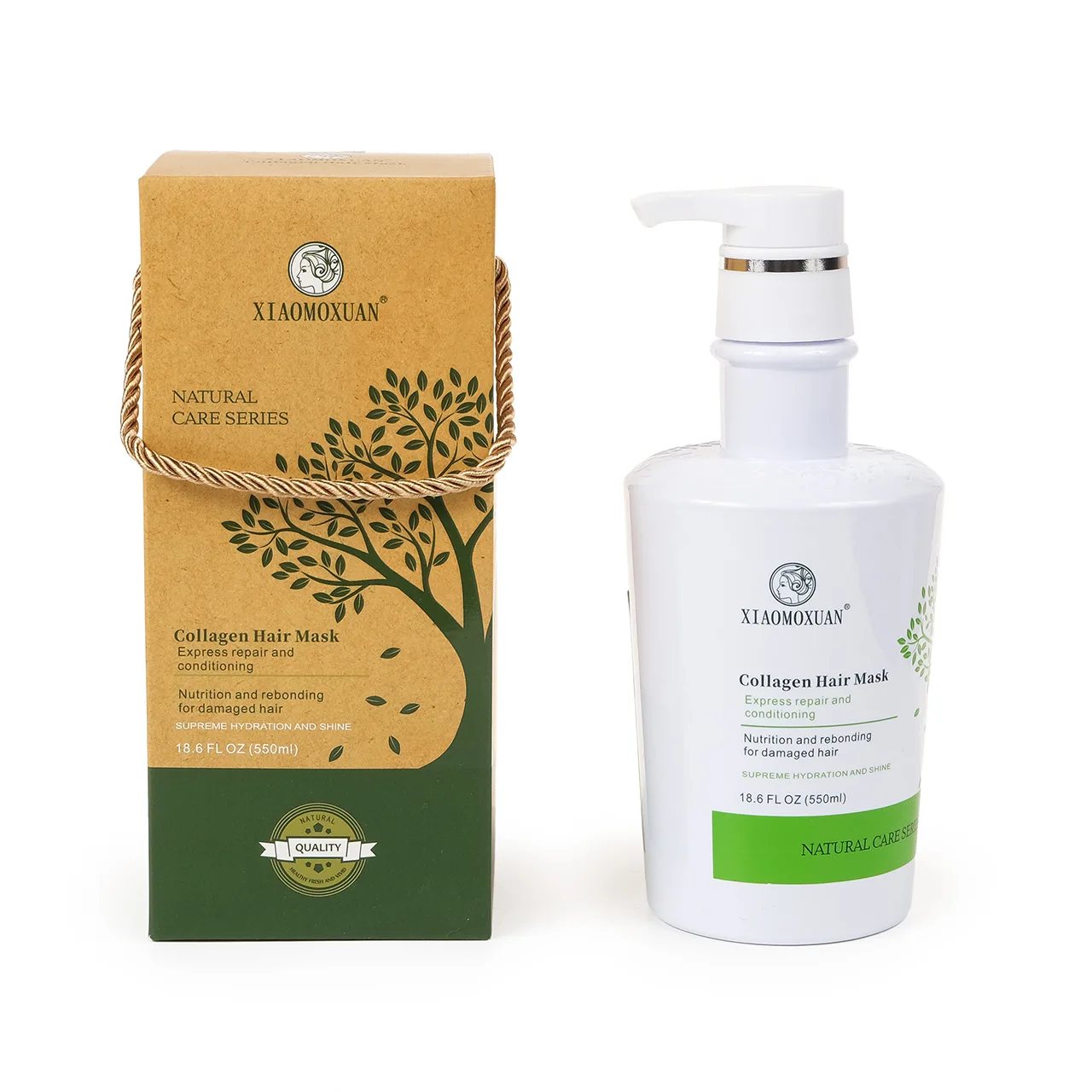
Leave-in hair care means products you apply after washing and don’t rinse out: sprays, fluids, creams, oils. They stay on the hair until the next wash and do two main jobs in that time – make combing easier and slow down the moisture loss from the lengths.
The most common format is a leave-in conditioner spray. You mist it onto towel-dried hair, comb through and go straight to blow-drying or styling. Below: how it differs from a regular conditioner, who actually needs it, how to apply it and how to pick the right one.
How a leave-in spray differs from conditioner and a mask
All three care for the lengths, but they work at different times and with different strength.
| Product | When to apply | Rinse out? | What it’s for |
|---|---|---|---|
| Rinse-out conditioner | After shampoo, for 1–2 minutes | Yes | Closing the cuticle after washing |
| Hair mask | 1–2 times a week, for 5–10 minutes | Yes | Intensive moisture and repair of the lengths |
| Leave-in spray | After towel-drying, before blow-drying, or on dry hair during the day | No | Detangling, protection before blow-drying, moisture until the next wash |
Conditioner and a mask work for a few minutes and then get rinsed away. A spray stays on the hair all day, so it protects the lengths exactly when you blow-dry them, pull them through a straightener or rub them against a scarf.
What a leave-in spray does – and what it doesn’t
Most leave-in sprays are built on silicones and conditioning agents. These coat the hair with a thin film, and that film is behind every effect:
- Combing without tugging. Strands catch on each other less, so long and curly hair is easier to detangle after washing.
- Less frizz. The film smooths raised cuticle scales, and hair reacts less to humid air.
- Anti-static. Conditioning agents remove the charge, so hair doesn’t stand up under a hat or from a synthetic jumper.
- Protection before heat styling. Only if the spray contains heat protection. Not every leave-in has it, so check the label.
What a spray doesn’t do:
- It doesn’t glue split ends back together. It smooths them for a day, but a split hair stays split. Split ends need trimming; the spray helps the new ends stay intact for longer.
- It doesn’t treat the scalp or affect growth. It’s care for the lengths.
- It doesn’t replace a mask for very dry hair. If the lengths are porous and brittle, you need both: a mask once or twice a week, a spray every day.
Who needs leave-in care
- Anyone who blow-dries or straightens their hair almost every day.
- People with long, thick or curly hair that tangles after washing.
- Anyone whose hair frizzes and gets static, especially during the heating season.
- People with roots that get oily fast and dry ends. Conditioner all over weighs this hair down, but a spray can go on the lengths only.
- Parents who brush out children’s plaits every morning.
If your hair is short and healthy and you don’t use a hairdryer, leave-in care isn’t essential – conditioner after washing is enough.
How to apply a leave-in spray
- After washing, blot your hair with a towel so it’s no longer dripping.
- Shake the bottle and spray from 15–20 cm onto the lengths and ends. Avoid the roots.
- Comb through with a wide-tooth comb: ends first, then the full length from top to bottom.
- Move on to drying or styling. No need to rinse.
How much: 4–6 sprays for shoulder-length hair, 8–10 for long hair. Start with less. If your hair feels heavy or sticky once dry, use less next time. During the day you can mist the dry ends again, for example before going out into frost or heat.
Xiaomoxuan leave-in sprays: Silky Smooth or Sea Balance
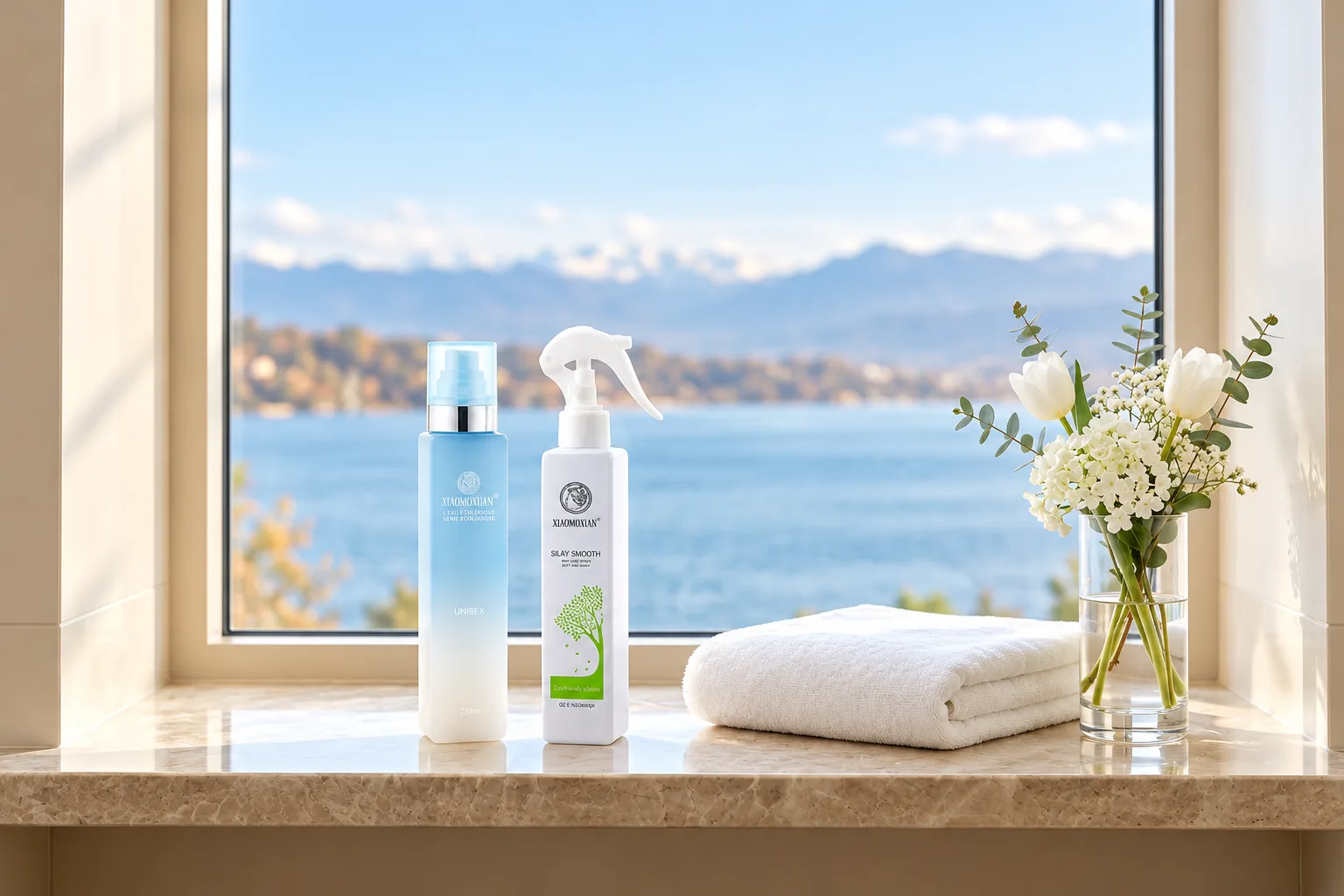
Xiaomoxuan has two leave-in conditioner sprays, 200 ml each. Both are light and both make combing easier, but each has its own job.
| Silky Smooth | Sea Balance | |
|---|---|---|
| Main job | Protection before the hairdryer, straightener and curling iron | Moisture for dry lengths |
| Heat protection | Yes, the only one in the Xiaomoxuan range | No |
| When to apply | On damp hair before styling | On damp or dry hair, also during the day |
| Best for | Fine hair that frizzes and goes flat quickly; daily heat styling | Dry, brittle ends; oily roots with dry lengths; long or curly hair |
| Line | Silky Smooth (with tea tree) | Balance (with sea salt) |
| Ingredients from INCI | Caprylic/Capric Triglyceride, Dimethicone, Amodimethicone, Hydrolyzed Keratin, Guar Hydroxypropyltrimonium Chloride | Glycerin, Dimethiconol, Dimethicone, Amodimethicone, Hydrolyzed Keratin, lemon and juniper oils |
Choose the Silky Smooth leave-in conditioner spray with heat protection if you use a hairdryer or straightener every day. It holds moisture in the hair while you dry it, and hair frizzes less after styling.
The Sea Balance moisturising spray suits you if you rarely heat-style and your problem is dry ends. The glycerin in it attracts water and the film slows evaporation, so it’s handy in a handbag, at the seaside or in summer heat.
Both sprays contain silicones. They’re what gives smoothness and easy combing, and in a leave-in product that’s normal: silicones stay on the surface of the hair and come off when you wash it.
Xiaomoxuan leave-in sprays
Silky Smooth for heat styling and Sea Balance for moisture – delivered across the EU.
How to choose leave-in care by its ingredients
It’s worth reading a leave-in label at least halfway down: the first ingredients on the INCI list form the base of the formula.
- Dimethicone, Amodimethicone, Dimethiconol – silicones. Responsible for smoothness, shine and easy combing. Amodimethicone settles mainly on the damaged parts of the hair.
- Glycerin – holds moisture. Works well on dry lengths.
- Hydrolyzed Keratin – temporarily fills in the rough spots on the surface of damaged hair.
- Guar Hydroxypropyltrimonium Chloride, Steartrimonium Chloride, Cetrimonium Chloride – conditioning agents. Remove static and make combing easier.
- Oils (Caprylic/Capric Triglyceride, plant oils) – soften and add shine, but in larger amounts weigh fine hair down.
For fine hair, look for a spray rather than a cream or oil: a liquid texture spreads more thinly. For very dry, porous hair, go for a product with glycerin and keratin, paired with a mask. If you style with hot tools, the key thing is “heat protection” on the bottle.
Mistakes that stop leave-in care from working
- Applying it to the roots. Hair gets oily by the next day and loses volume.
- Using too much. Strands clump together and look unwashed. Better to add a couple of sprays to the ends than an extra layer all over.
- Spraying onto dripping wet hair. The water dilutes the product and it runs off.
- Straightening without heat protection. An ordinary moisturising spray won’t protect hair from 180–200 °C.
- Expecting the spray to “cure” your hair. It keeps the lengths smooth and manageable while it’s on them. Damaged hair only improves with regular care and trimming the ends.
If your hair stays dry even with a spray, check your whole routine: how to spot dry hair and rehydrate it at home.
Leave-in hair care: questions
Why use a leave-in spray if I already use conditioner?
Conditioner is rinsed out after 1–2 minutes and closes the cuticle after washing. A spray stays on the hair until the next wash and works while you blow-dry, style and wear a hat. They’re two different steps; one doesn’t replace the other.
Can I apply a leave-in spray to dry hair?
Yes, if it’s a moisturising spray. Sea Balance, for example, can be misted onto dry ends during the day. A heat-protection spray is better applied to damp hair before drying, so it spreads evenly before the hair meets hot air.
Does a leave-in spray weigh fine hair down?
It does if you use too much or put it on the roots. For fine shoulder-length hair, 4–5 sprays on the lengths only are enough. The light Silky Smooth formula is designed for exactly this kind of fine hair that loses volume quickly.
Can a leave-in spray replace a heat protectant?
Only if it contains heat protection. Among Xiaomoxuan sprays, that’s Silky Smooth. Sea Balance moisturises, but it isn’t enough before a straightener or curling iron.
Does a leave-in spray seal split ends?
No. It smooths them, and for a day or two the ends look neater, but a split hair doesn’t grow back together. Split ends need trimming; the spray helps the new ends stay intact for longer.
Leave-in spray or hair oil – which should I choose?
A spray is for the full length and for daily use, especially on fine hair. Oil goes on drop by drop, ends only; it’s richer and quickly weighs fine hair down. For dry ends you can combine them: spray on damp hair, then a drop of oil on the very tips once it’s dry.
Can I use a leave-in spray every day?
Yes, that’s what it’s made for. Silicones from a leave-in come off when you wash your hair, so with regular washing they don’t build up. If your hair still starts to feel heavy, cut down on the number of sprays.
A leave-in spray for your hair
Daily hairdryer and straightener – Silky Smooth with heat protection. Dry ends and summer sun – Sea Balance. Delivery across the EU.