July is the toughest month of the year for hair. Not because of the heat itself – but because over four weeks, damage builds up from sun, pool chlorine, sea salt, hot air, and the constant cycle of drying out and getting wet again. Hair doesn’t show it right away. The problems show up in August and September – breakage, dullness, dry ends that no conditioner can fix.
The good news: summer hair care isn’t complicated. Just three things need to change – what you put on your hair, how often, and in what order. This article breaks it all down step by step.
Why summer damages hair differently than other seasons
UV radiation in July breaks down keratin – the same protein that holds the hair fiber’s structure together. But unlike a sunburned shoulder, hair doesn’t show it right away. Damaged keratin shows up as a rough surface that loses shine and starts to break – weeks after the actual exposure.
Pool chlorine works differently. It penetrates the hair fiber and strips out natural lipids – the fats that protect hair from drying out. After one day at the pool, you won’t notice. After ten days, hair is dry and porous.
Sea salt does the same thing, just faster. And since it’s rarely rinsed out properly right after swimming, it stays in the hair and keeps pulling out moisture.
Add temperatures above 30°C, which pull moisture straight out of hair through the air – and you’ve got the full recipe for a summer crisis. July sets it off. October pays the price.
Summer shampoo: fewer sulfates, more hydration
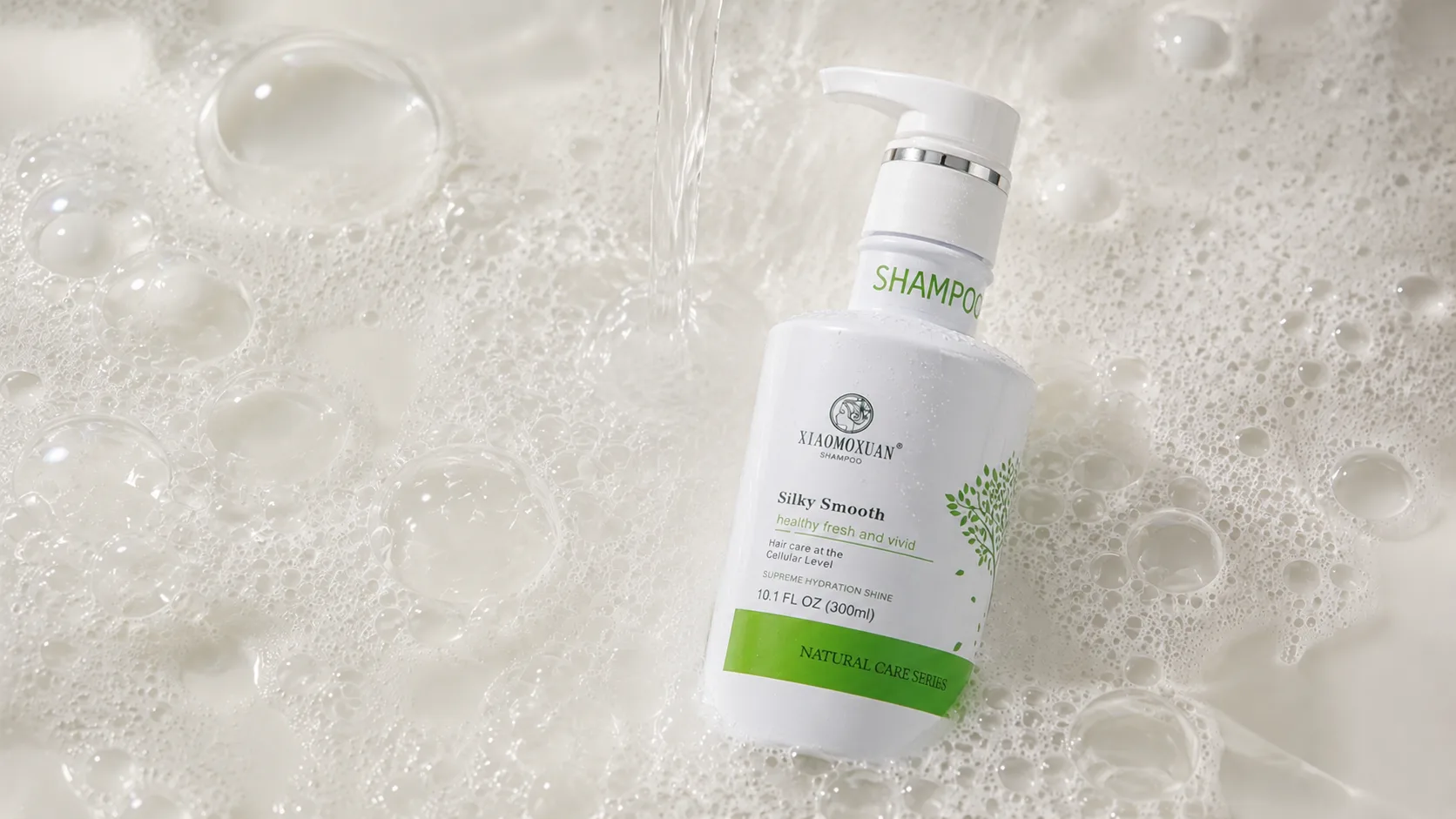
Most people wash their hair more often in summer – sweating, swimming. Makes sense. But if you’re using a shampoo with SLS (sodium lauryl sulfate), it strips hair more aggressively than it needs to – and the scalp reacts by producing more oil. Result: hair gets greasy faster, so you wash it even more. A closed loop.
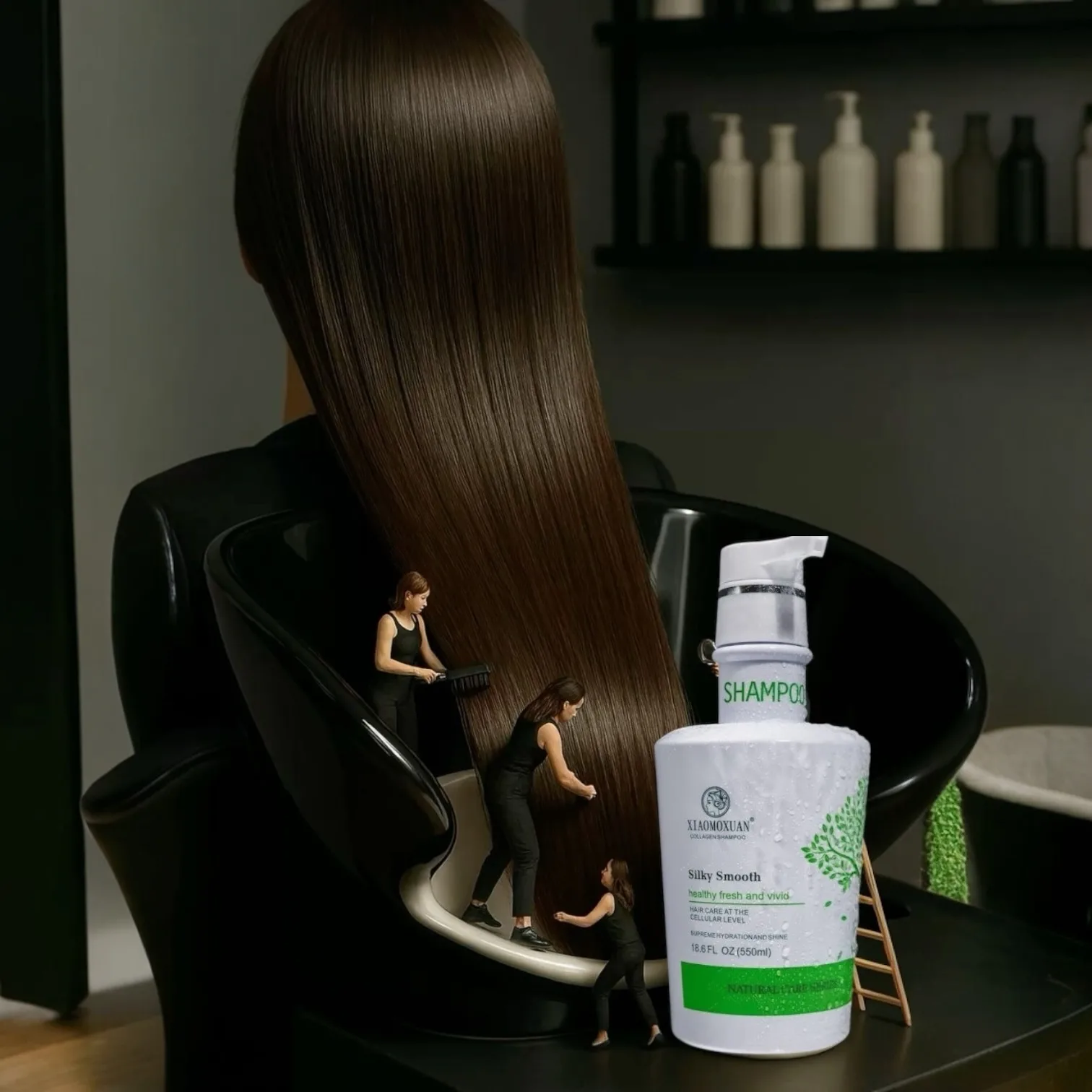
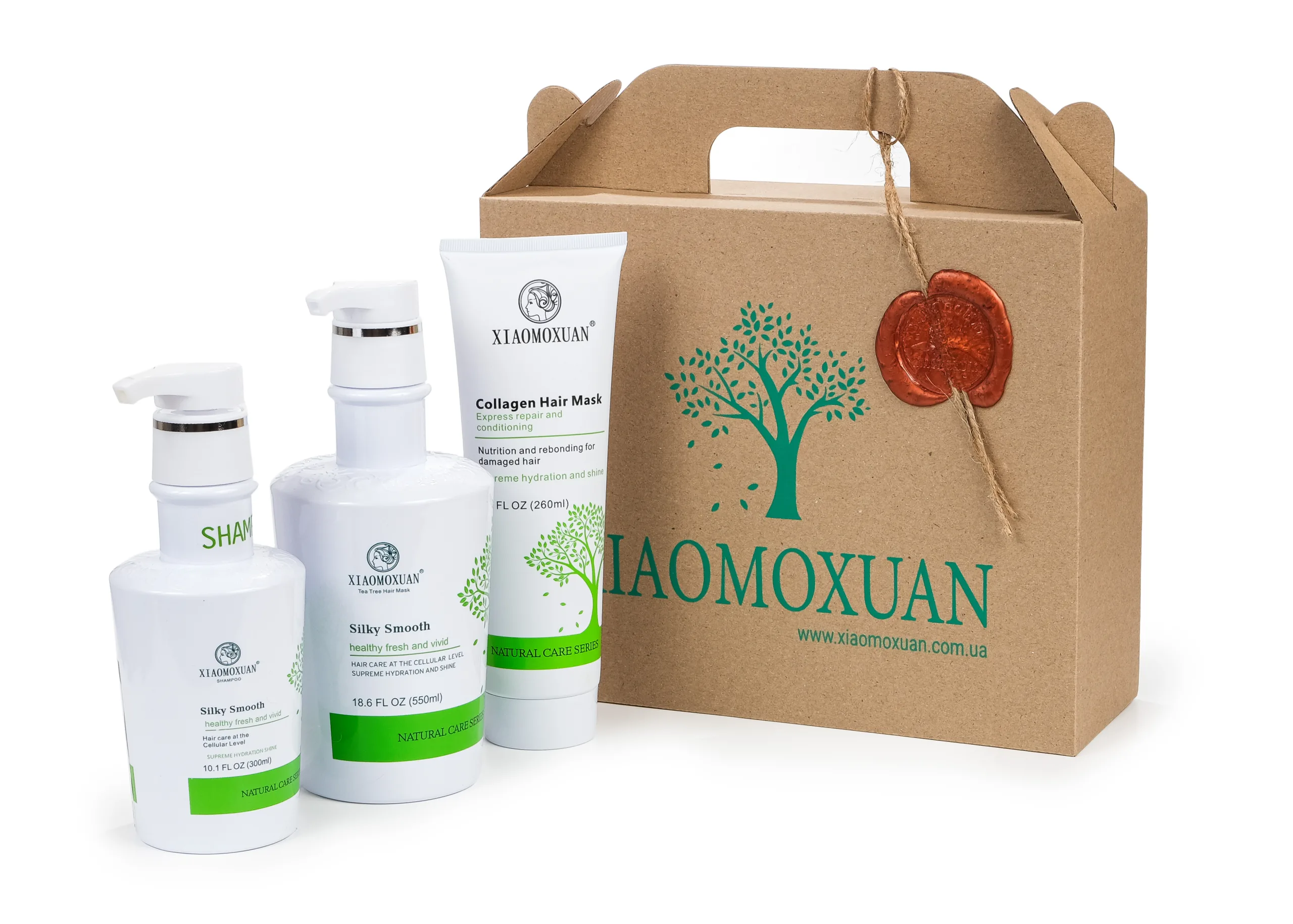
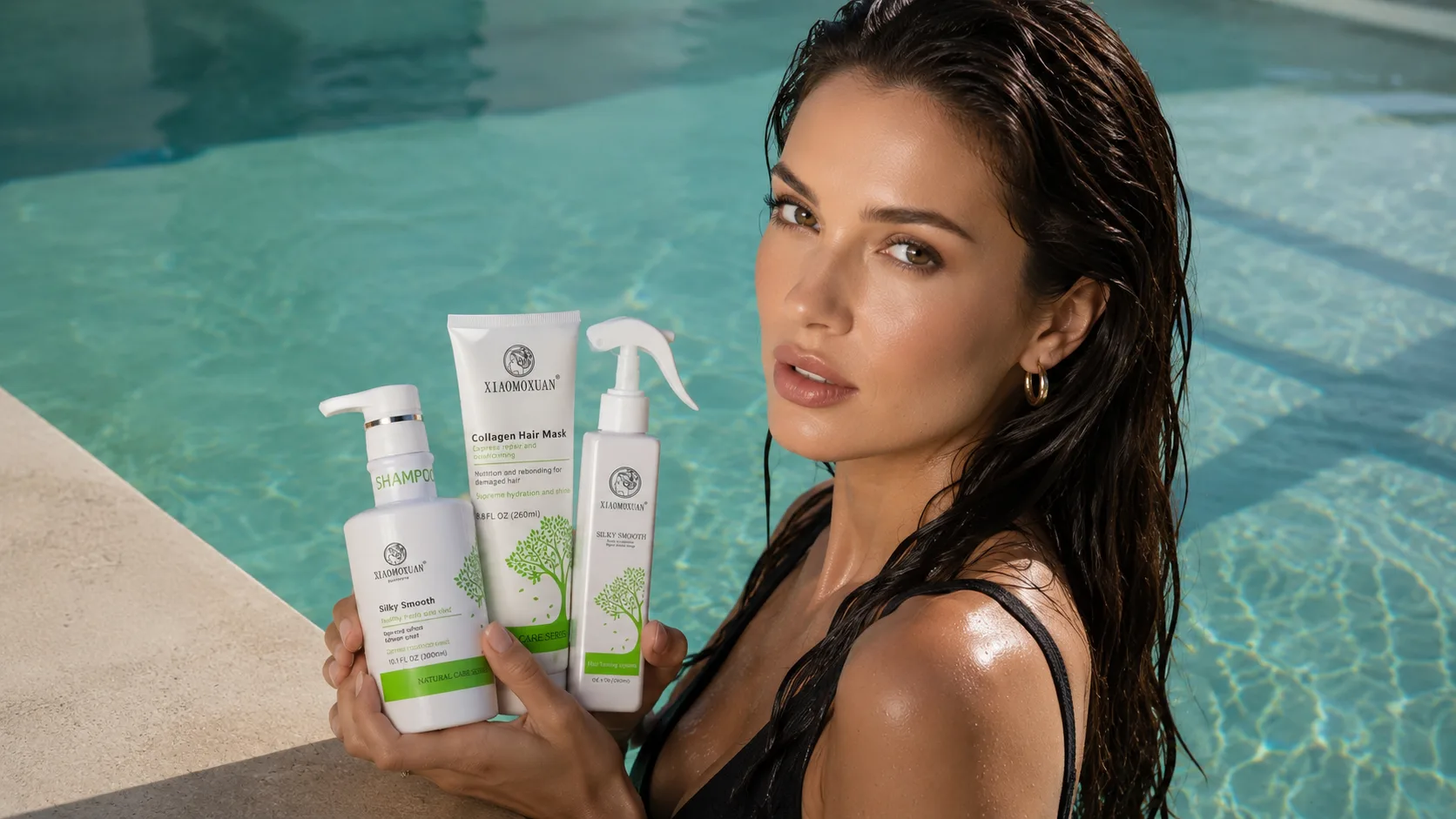
Sulfate-free shampoos break that cycle. They clean gently, don’t damage the skin’s natural protective barrier, and leave hair with the moisture it’s missing in summer. Xiaomoxuan shampoos are formulated without SLS and parabens – with tea tree extract, which also calms an overheated scalp.
How to wash your hair in July
- Water temperature: warm, not hot. Hot water opens the cuticle, and moisture escapes even faster.
- After the pool or the sea: always rinse your hair with clean water as soon as possible – right there, before you leave. Shampoo comes later, at home.
- Frequency: don’t wash your hair every day just because of the heat. A rinse with clean water is enough – shampoo every other day.
- Amount: less than you’d think. Sulfate-free shampoo lathers less, but cleans just as well.
Xiaomoxuan shampoos without SLS or parabens
Gentle cleansing without drying out – for daily summer use.
Mask instead of conditioner: the summer switch that makes sense
A regular conditioner works on the surface of the hair – smoothing the cuticle and adding shine. In winter, that’s enough. In summer, when hair is losing moisture from the inside, conditioner alone isn’t. You need a mask.
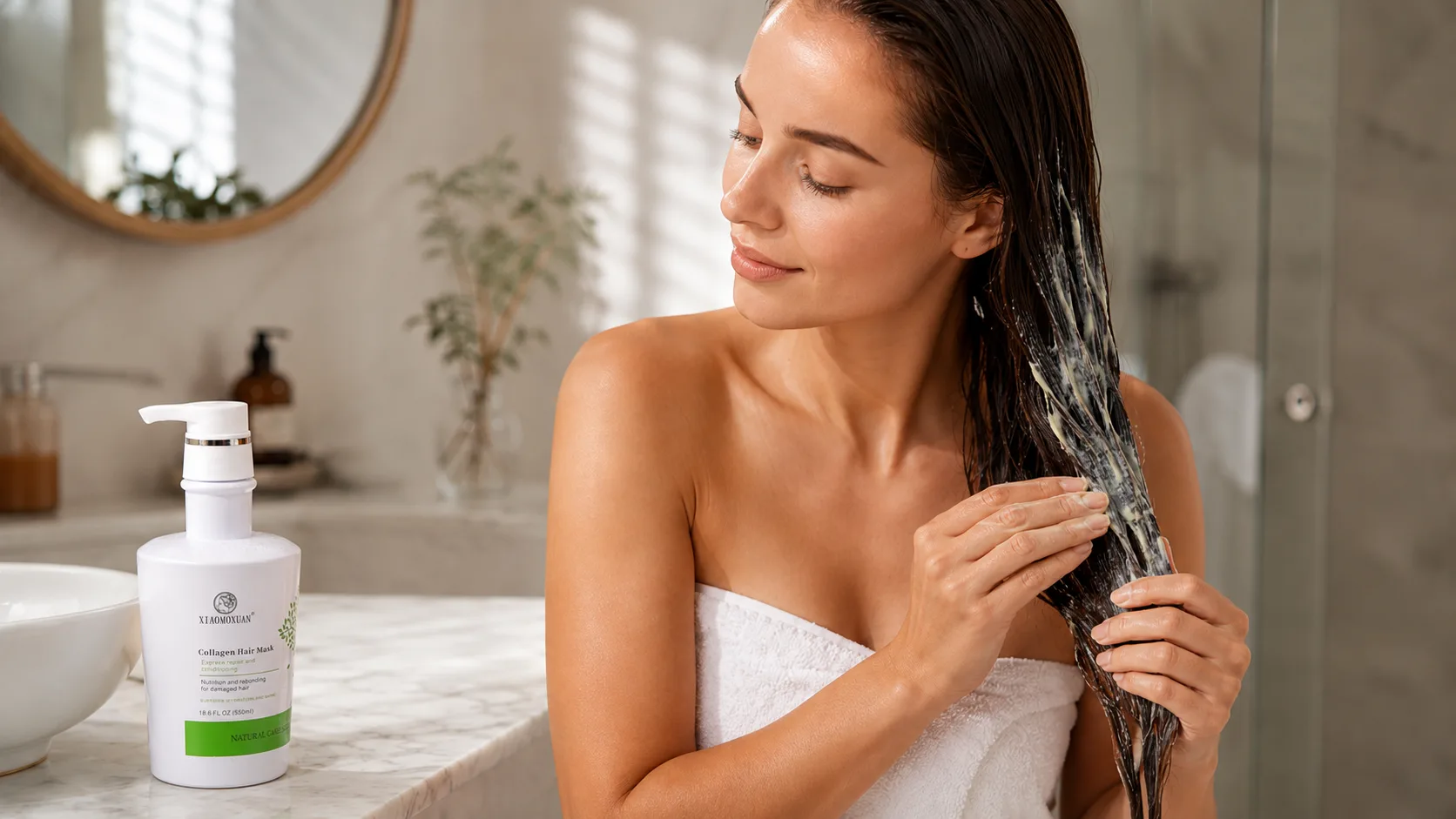
A hair mask penetrates deeper into the hair fiber’s structure and restores the proteins and moisture that sun and chlorine strip away. You won’t see the result after the first use – but by the third or fourth wash, hair holds its shape better, breaks less, and conditioner starts working better than before.
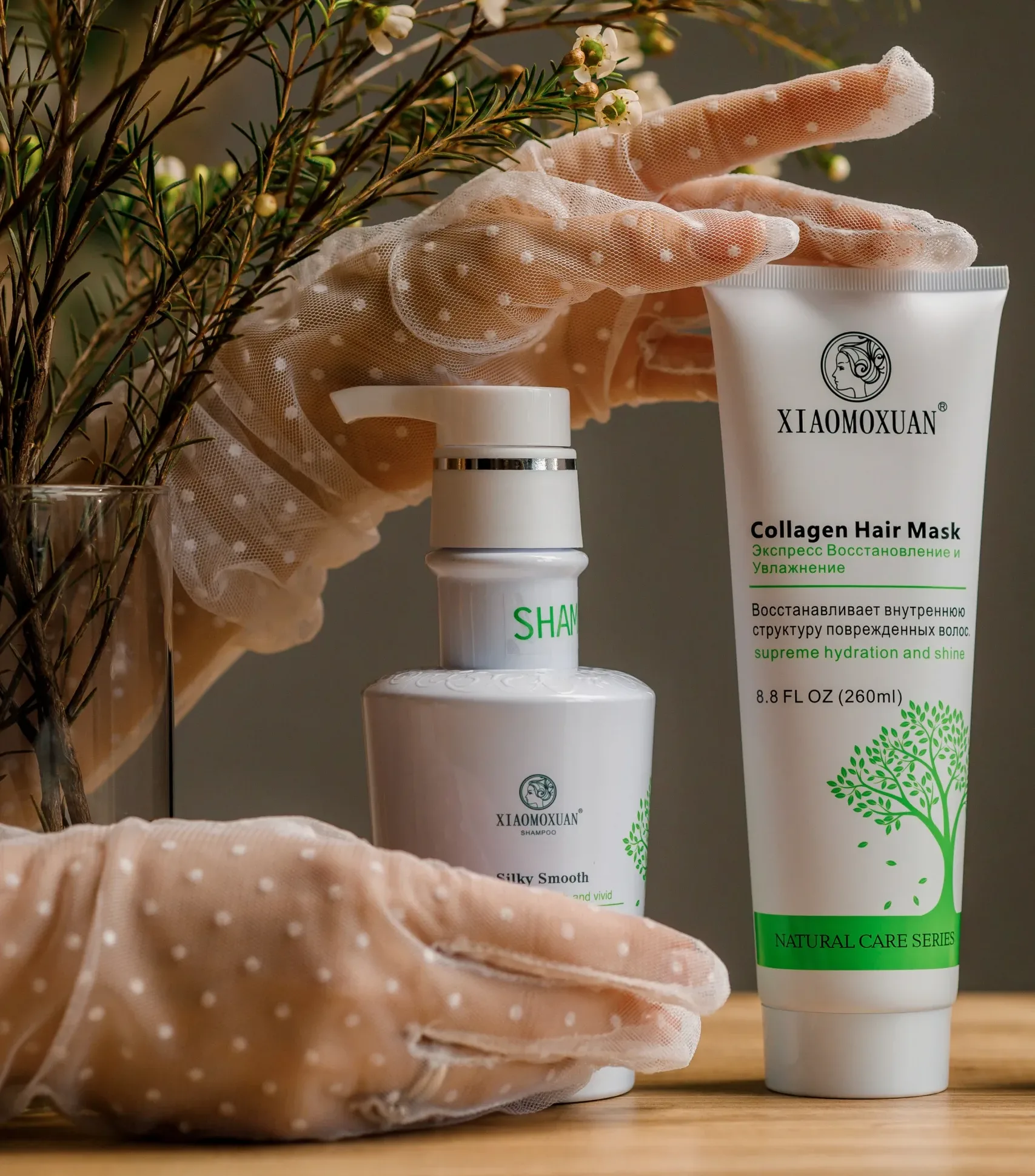
Xiaomoxuan collagen masks are built for exactly this kind of stress – deep nourishment without silicones that would weigh hair down in the heat. The collagen in the mask binds damaged fibers back together and restores the elasticity hair loses from UV exposure.
How to use a mask correctly in summer
- After shampooing, gently blot out excess water with a towel – the mask absorbs better into damp hair, not soaking wet hair.
- Apply from mid-length to the ends. Skip the scalp – it can take care of itself.
- Leave it on for 5-10 minutes. No heat cap. No blow dryer. Just wait.
- Rinse thoroughly with cold or lukewarm water – cold water closes the cuticle, and the shine shows up immediately.
- Frequency: once a week as a baseline, twice a week after heavy sun or pool exposure.
Xiaomoxuan collagen masks
Deep nourishment without silicones – for hair after sun, chlorine, and the sea.
Leave-in spray: the step most people skip
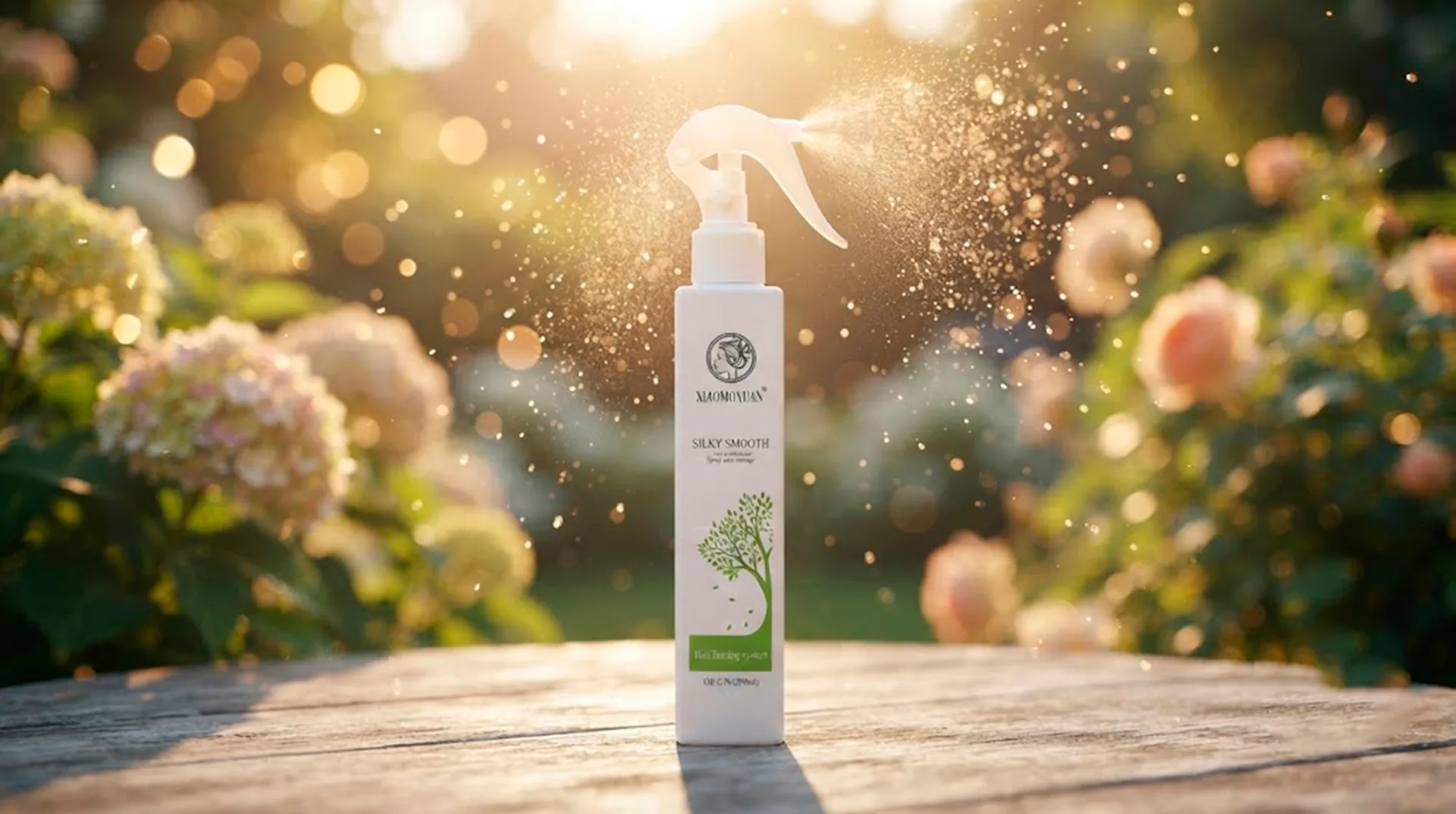
After washing and masking, hair looks good. The problem starts the moment you step outside. The sun starts breaking down keratin again, wind mechanically damages hair, and hot air pulls out the moisture you just put back in.
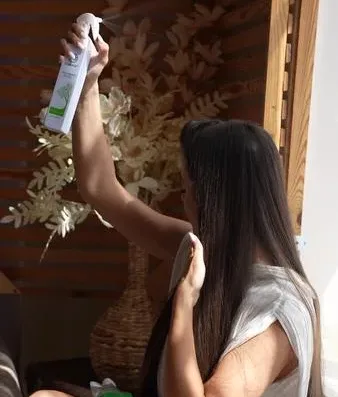
A leave-in conditioner spray forms a protective layer that slows this process down. It’s not a replacement for the mask – it’s protection that complements it. Applied to damp hair before you leave the house, and it doesn’t rinse out.
Xiaomoxuan’s Silky Smooth spray doubles as heat protection – shielding hair while blow-drying and from direct sun exposure. Sea Balance Balancing Spray also helps hair recover its scalp pH after the pool or sea, which harsh water throws off.
When and how to apply the spray
- On damp hair after washing – before blow-drying or air-drying.
- Spray from 20-25 cm away, evenly across the length, avoiding the scalp.
- Before the pool or the sea: apply to dry hair as a barrier. Chlorine and salt penetrate less easily then.
- On dry hair as a midday refresh – two spritzes on the ends help prevent breakage.
Xiaomoxuan sprays and conditioners
Heat protection and hydration – for hair that’s active all summer.
Hair care after the pool and sea: what to do tonight
Ten minutes of care right after swimming does more than an expensive restorative treatment in September.
First: don’t wait. The longer chlorine or salt stay in your hair, the more damage they do. Rinse your hair right after you get out of the water – a quick shower or even bottled drinking water works.
At home:
- Wash with a sulfate-free shampoo. Once is enough – no need to double-shampoo if you rinsed right away by the water.
- Apply the mask. This time it’s fine to cover all of your hair, including the scalp, if it was in contact with chlorine.
- After rinsing: leave-in spray and air-drying. Blow dryer if you need it – but on a lower heat setting.
Hair after the pool tends to feel rough and frizzy to the touch. A collagen mask restores that texture – but it takes time. Don’t expect a miracle after one wash. After the third one – yes.
Frequently asked questions about summer hair care
Do I need to protect my hair from the sun the same way I protect my skin?
Yes, just differently. You protect skin with SPF cream, hair with a protective spray with a filtering layer, or physically – a scarf, a hat. UV radiation breaks down keratin and lightens pigment, so colored hair without protection fades faster in summer. A leave-in spray, especially one with heat-protective ingredients, slows down UV degradation.
How do I know my hair needs more care?
Three signs: ends break when you comb through, hair loses shine quickly after washing, and it feels rough to the touch even along the length. If that’s happening, conditioner alone won’t cut it. It’s time to make a mask and leave-in spray a regular part of your routine, not an occasional extra.
Can I use a mask every day?
Gentle collagen masks – yes, they’re formulated so they don’t overload the hair fiber. Intensive protein-rich repair masks shouldn’t be used more than twice a week, though, since too much protein can make hair stiffer and more brittle.
What do I do if my hair turned green after the pool?
A green tint in light hair comes from copper in the pool water, not chlorine. An acidic rinse helps – a few drops of apple cider vinegar in water, or a special mineral-removing shampoo. Prevention: apply a leave-in spray to your hair before getting in the water – it creates a barrier that copper has a harder time getting through.
Do I need to change my entire routine in summer, or is adding one thing enough?
One change makes the biggest difference: add a weekly mask. Everything else – sulfate-free shampoo, leave-in spray – are improvements that boost the result. But the mask is the foundation. If you’re not doing anything extra right now, start there.
Keep your hair healthy through fall
Sulfate-free shampoo, collagen mask, and leave-in spray – three steps that protect hair from July through September. No SLS, no parabens, no unnecessary additives.